Massimo Scognamiglio
The Rooms of the State
An allegory of power, from the Rooms cycle
· @Massimo
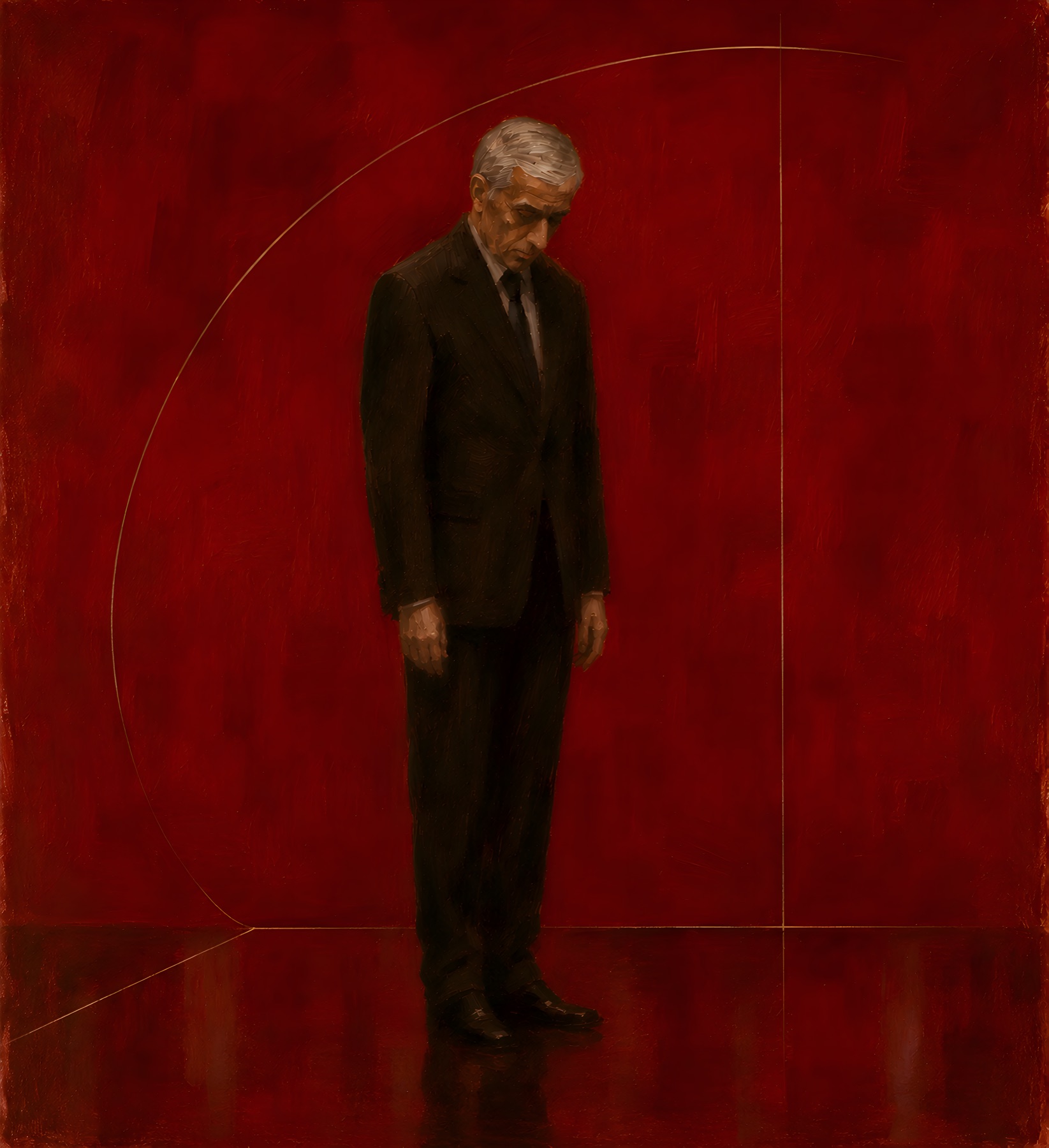
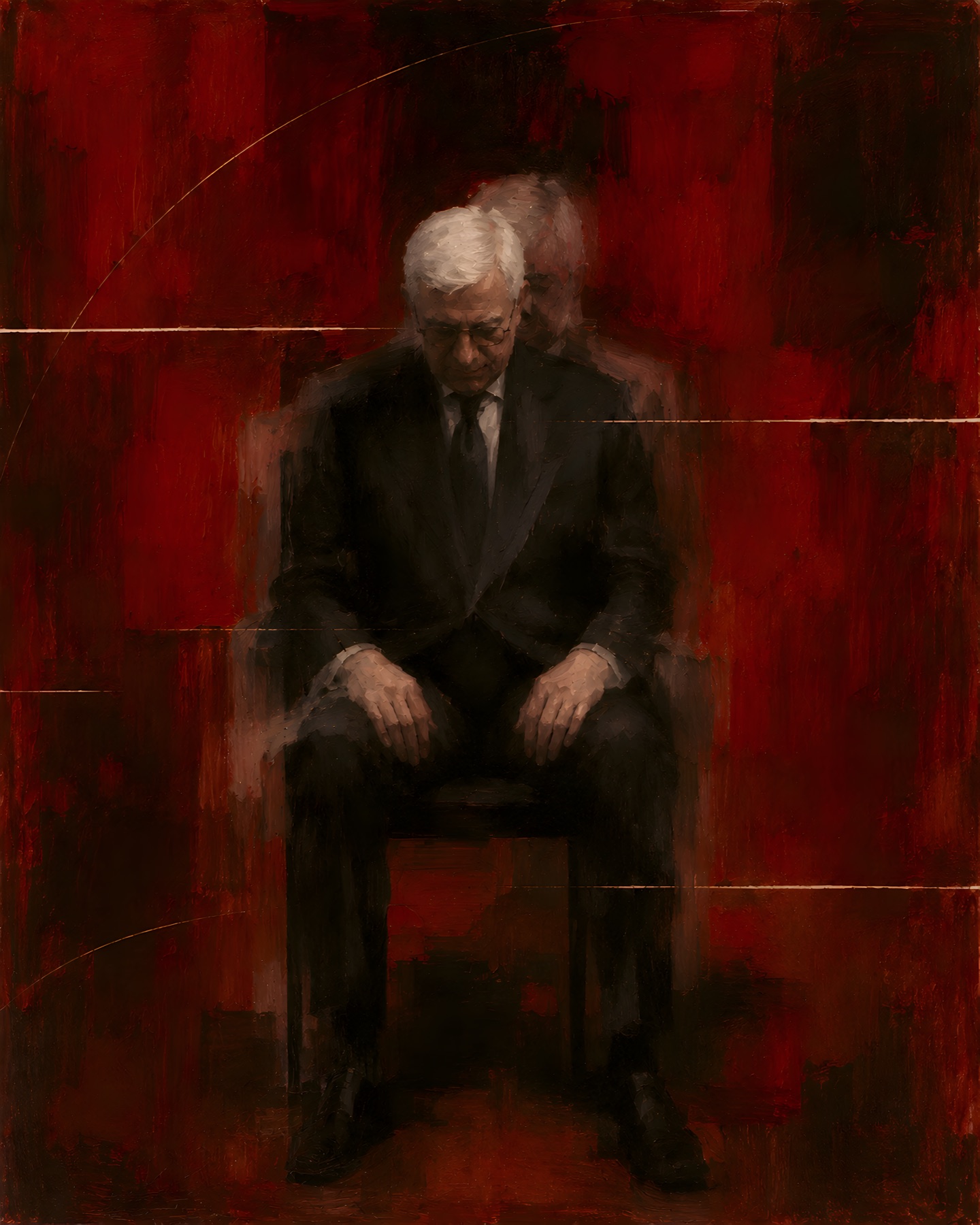
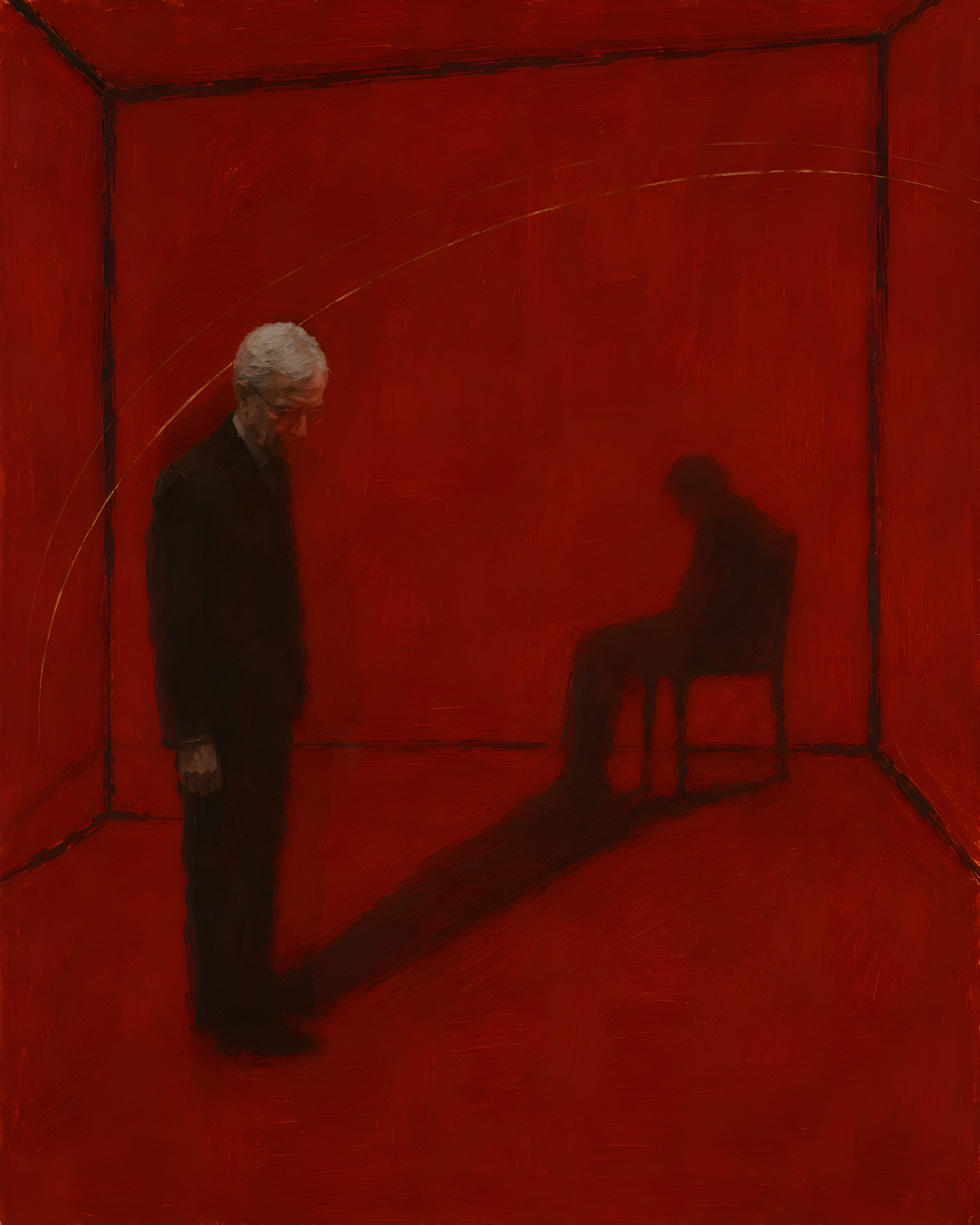
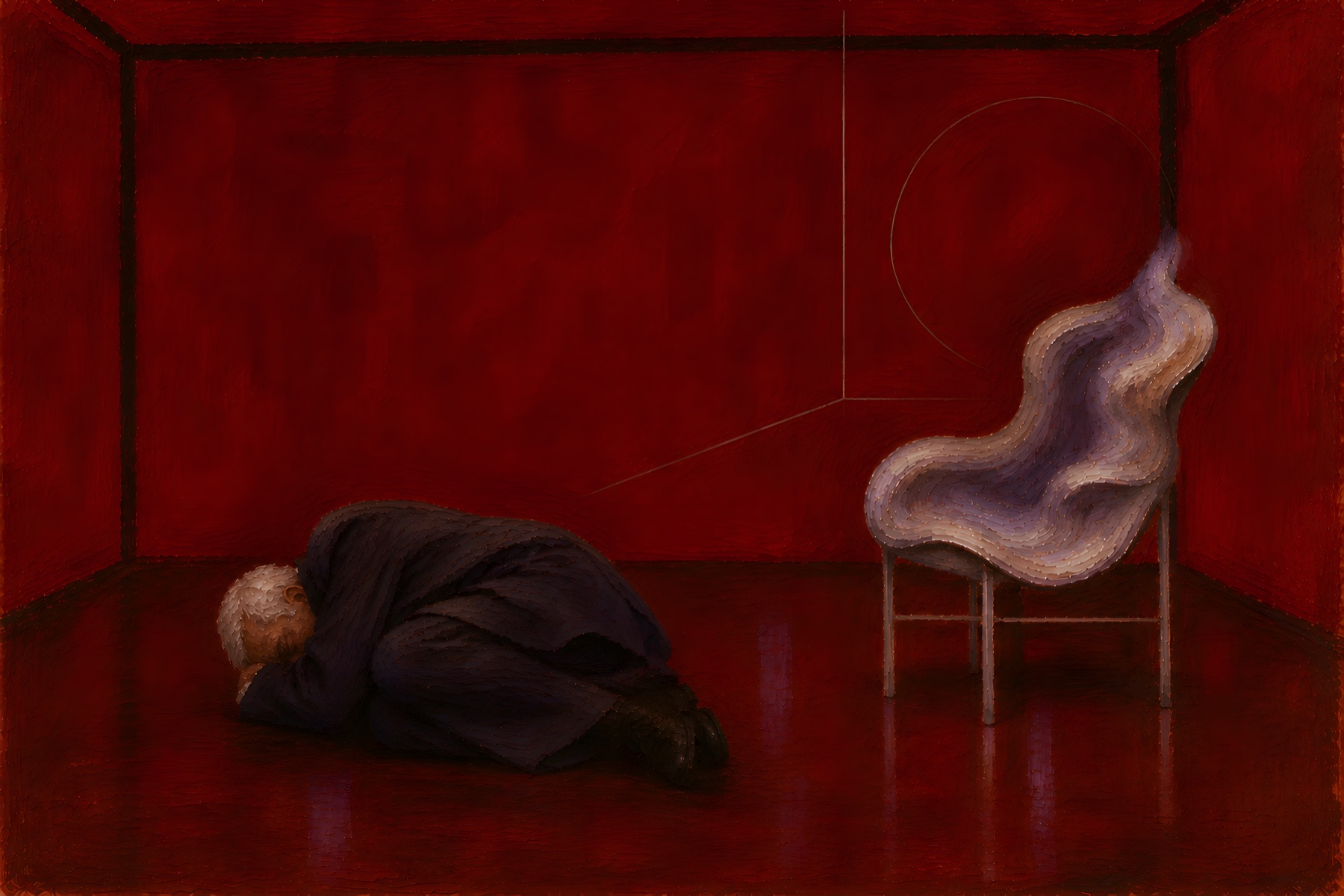
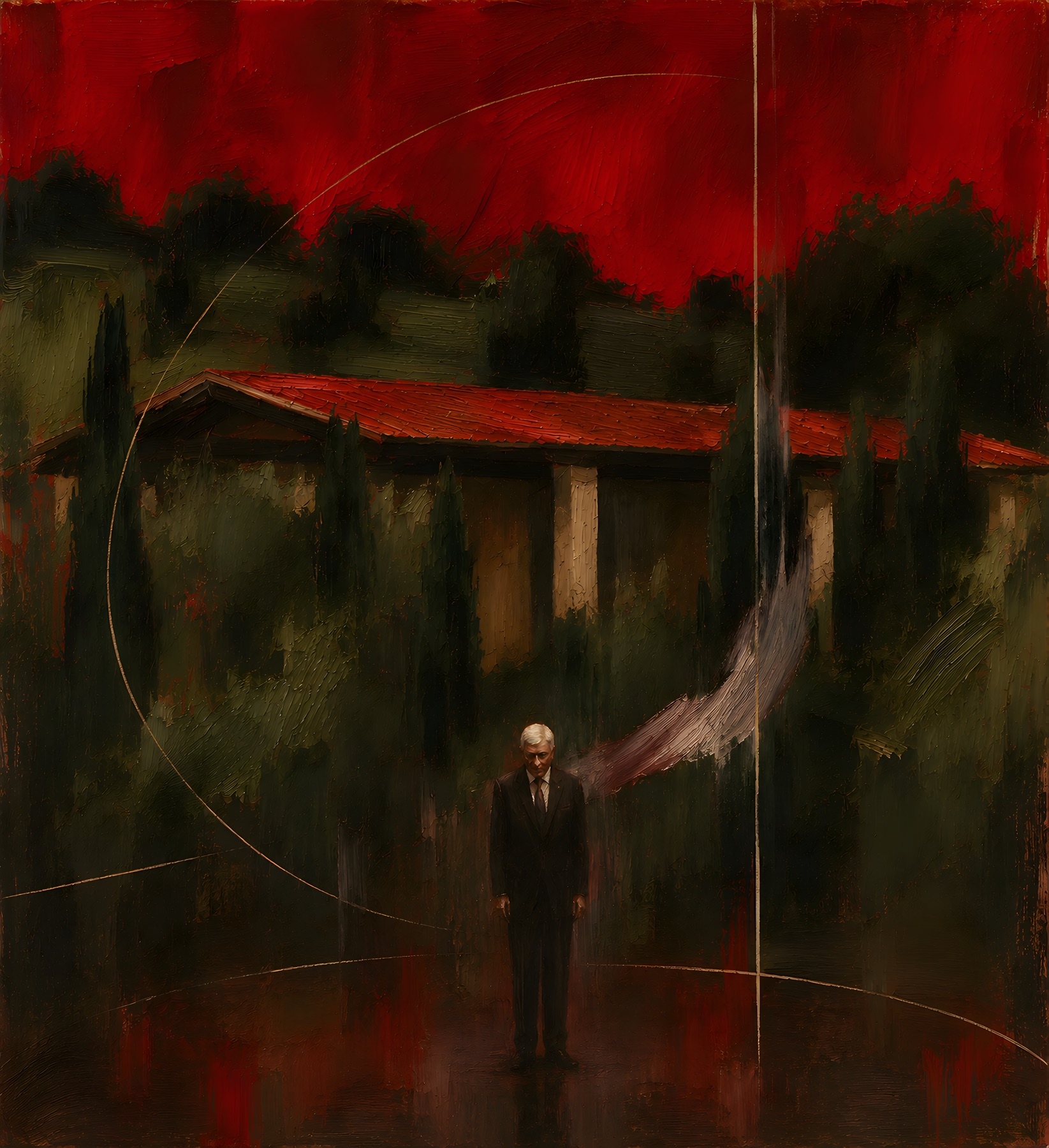
A man of the State has entered the series of rooms I’ve been painting since 2008. In L’uomo De Gennaro, his arms hang at his sides, his face is turned towards the floor, and a gold arc rises from the floor and passes over his head without touching it. Around him, a great deal of red. His hands are empty. I’ve called this group of paintings The Rooms of the State because the room, which in my work has always been a private place, now holds a man whose office had taken his name from him long before the end.
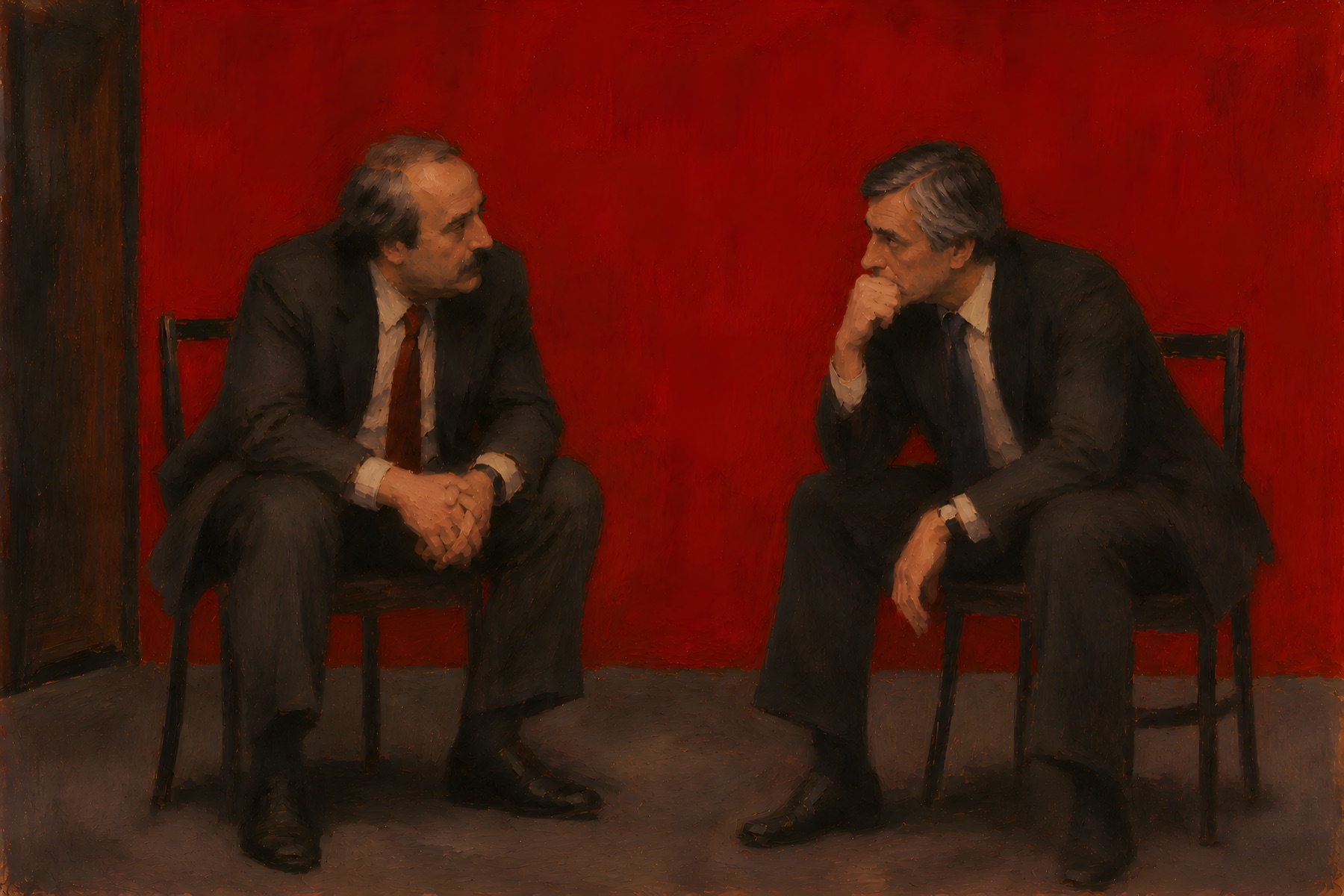
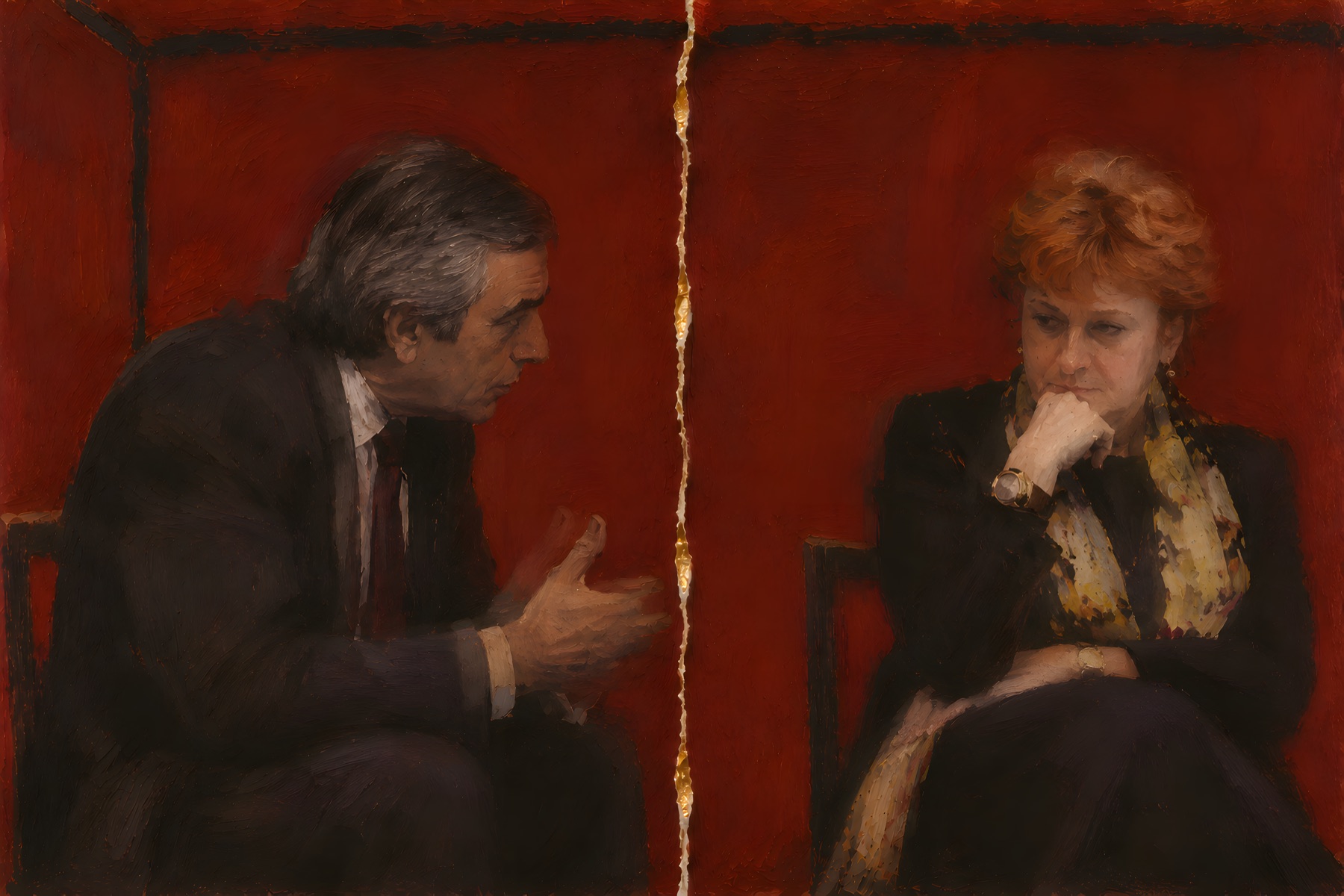
Elio Petri had already given that arc its precise shape: a citizen above suspicion, a man without a name, known to everyone simply as ‘il Dottore’. The metaphor still holds, but today I read it from the other side. To stand above suspicion is not merely a privilege: it is a position from which there is no stepping down. When a man has for decades embodied the office, been the face of law and order, the keeper of the Republic’s secrets, he cannot come under suspicion without the office itself beginning to crack. When suspicion comes, it strikes not the man but the arc. And beneath the arc stands someone who no longer knows to whom he belongs.
People will speak of frailty, of loneliness, of an elderly man overwhelmed by an investigation. Perhaps it is all true. But there is an unease that does not reside in any one person’s mind: it resides in power. A State that in more than thirty years has failed to tell the whole truth about the Via D’Amelio bombing lets a malaise build up in its rooms that no single life story can fully account for, and that closing a case file cannot cure. For decades the words ‘chief of police’ stood in place of a man’s name; now that the name has returned, the question is who answers for the silence beneath the arc. I paint neither a culprit nor a victim. I paint a room in which the State, for once, has nothing left to hold in its hands.
Massimo Scognamiglio
The fourth room
Il fascicolo che non muore
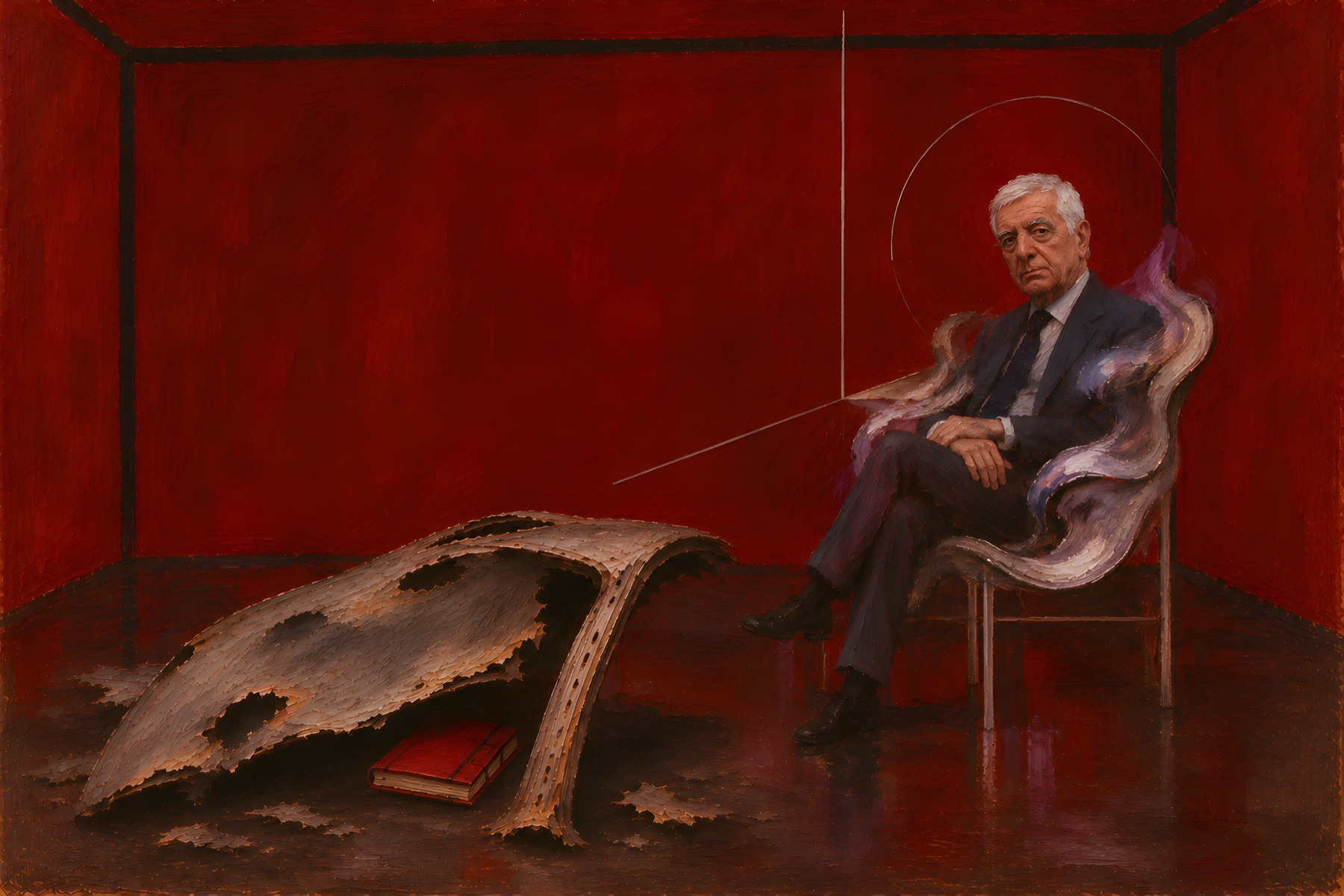
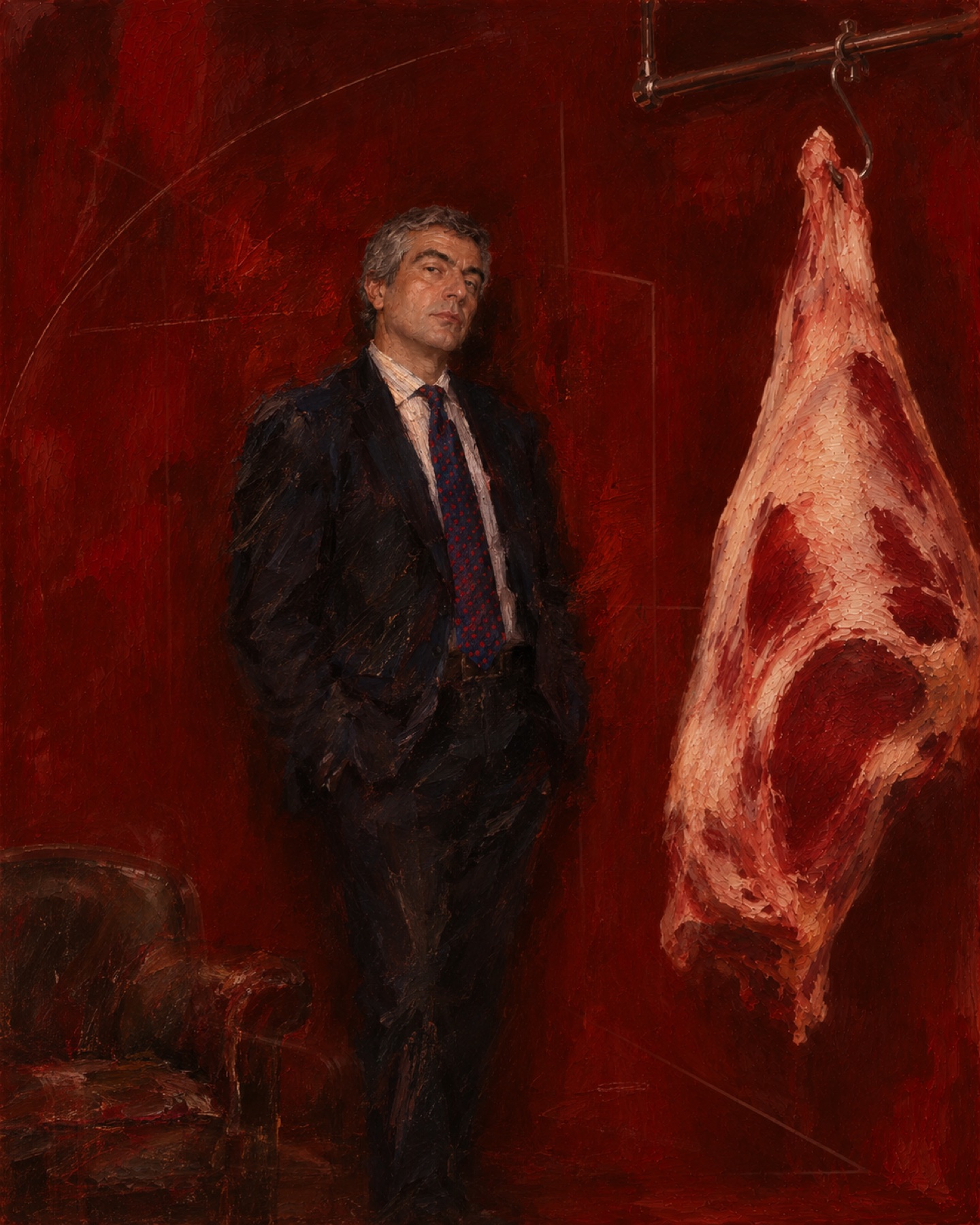
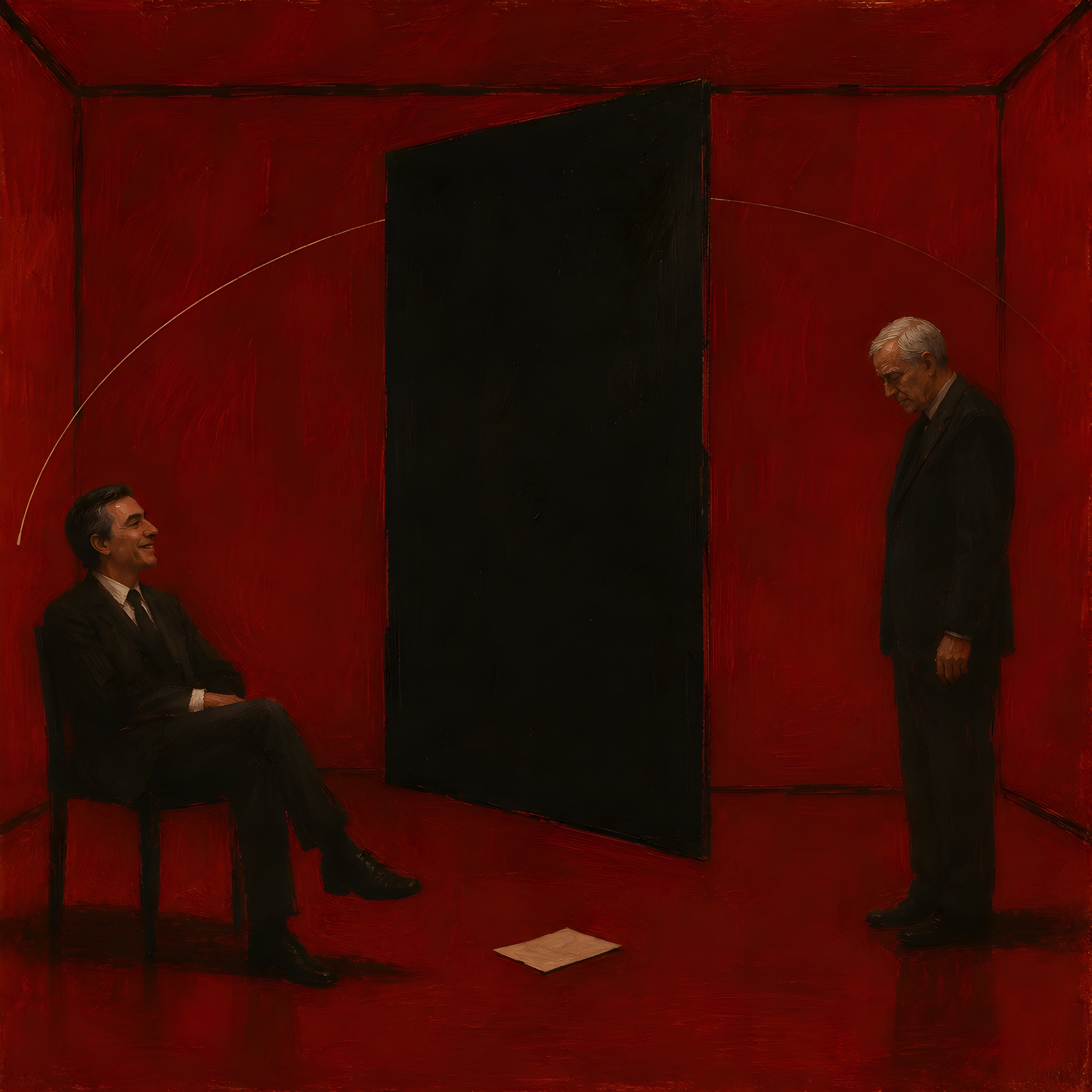
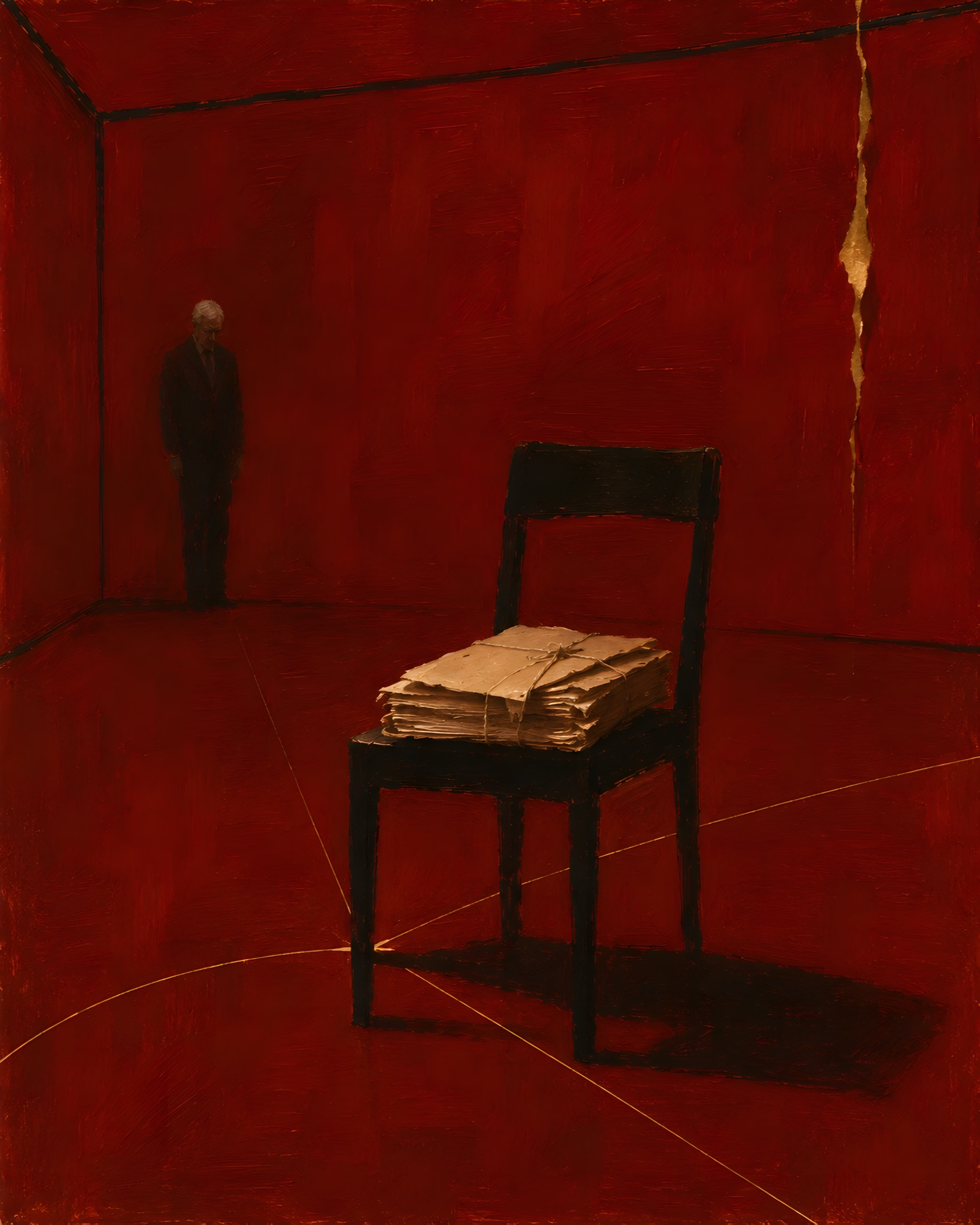
In the first painting I seated Giovanni Falcone and Gianni De Gennaro next to each other. In the fourth, Il fascicolo che non muore (The File That Won’t Die), the chair closest to us is piled with papers. You have to look to the back of the room to find the man. That is where I found the question I want to ask the people who write and take photographs for newspapers: which story would you have liked to stay with, even after the paper stopped covering it?
First cycle · L’ultima edizione
The Story Isn’t Over
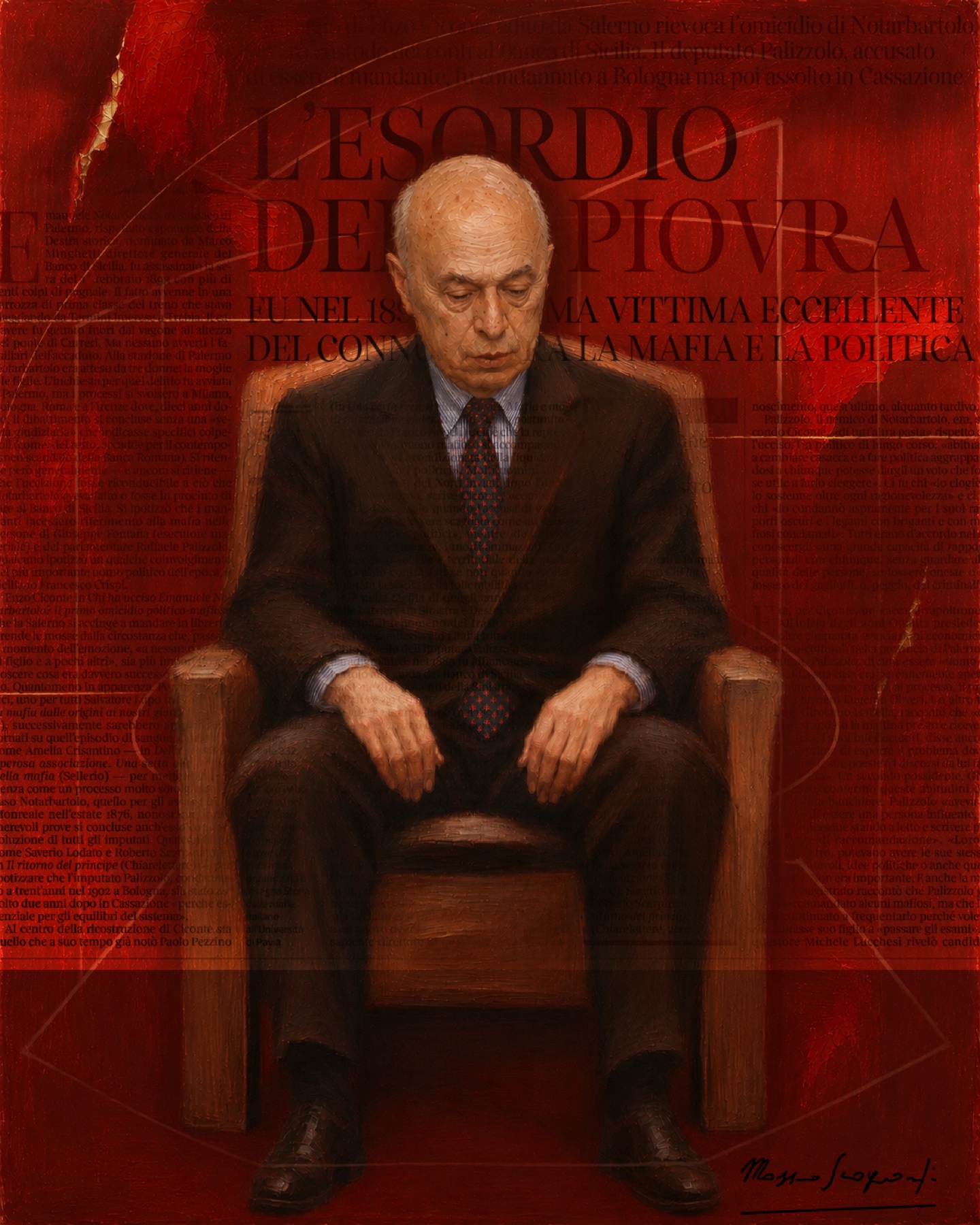
La notizia non è finita (The Story Isn’t Over) is Massimo Scognamiglio’s art project about what happens to events after they cease to be news. Editors, journalists, correspondents and photographers are invited to revisit stories that have dropped out of the headlines but still raise questions, bring contradictions to light and invite new readings.
Working with testimony and documents, Scognamiglio uses digital painting, artificial intelligence and interventions by hand to turn these stories into works of art. The question running through them is where truth, memory and representation meet.
The first cycle, L’ultima edizione (The Last Edition), opens with Il fatto non ha letto il giornale, a work dedicated to Paolo Mieli. The growing visual archive is intended to become an exhibition, Chiuso per storia, a publication and a digital platform.
The project is not a celebration of journalism. It asks how reporting relates to history, starting from a simple conviction: a newspaper closes; history doesn’t.
Le Stanze dello Stato · 05—11
The other rooms