I reread The Age of Silence after coming across a piece of news that sounds like science fiction but emerges from thousands of New York Police Department records.
Amnesty International and the Surveillance Technology Oversight Project obtained them after a five-year lawsuit. The documents show facial recognition being used to identify protesters, monitor police critics and place artists in a kind of virtual line-up because of material shown in a music video. In another incident, two men were treated as suspicious because they were not dancing and one of them was speaking on the phone in a language described simply as “Middle Eastern.”
This is not a story about a machine seizing power. Human beings give a machine a prejudice, a fear or a political objective, then receive a name in return. Artificial intelligence makes the operation faster, broader and far less visible.
It has happened elsewhere too. In 2023, the European Court of Human Rights condemned the Moscow authorities’ use of facial recognition against a man who had taken part in a peaceful solo protest. His face turned the expression of an opinion into a trace that could be followed. The Court found violations of both his right to private life and his freedom of expression.
The European Union has attempted to draw a boundary. The AI Act prohibits untargeted scraping of images from the internet or CCTV footage to build facial recognition databases. With narrowly defined exceptions, it also prohibits real-time remote biometric identification in public spaces for law-enforcement purposes. If this boundary had to be written into law, the possibility no longer belongs to fantasy.
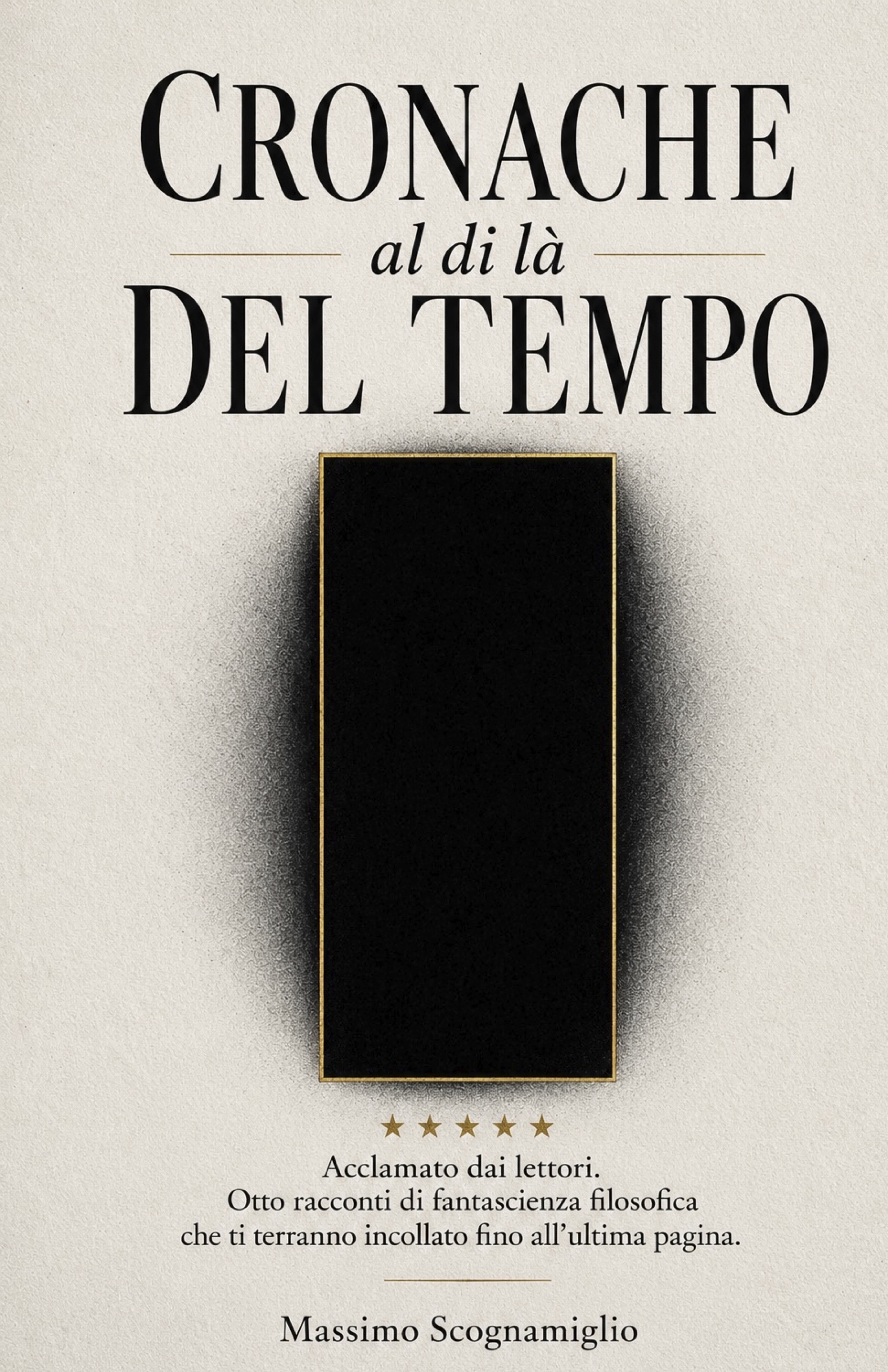
The opening story of my book Cronache al di là del tempo is set in 2042. Artificial intelligences have been renamed “commercial intelligences,” a more reassuring expression, something that sounds as ordinary as an item bought at a supermarket. They know people’s thoughts, detect emotions and desires, and anticipate every need. Nobody has forced human beings to stop speaking. Speech has simply become unnecessary.
For me, that distinction is the centre of the story. The most effective authoritarian power does not always arrive as a prohibition. It can take the form of convenience, safety, health or personalised assistance. It does not say: “Do not go outside.” It makes going outside seem tiring and pointless. It does not say: “Do not think.” It offers a system that thinks before you do. It does not say: “Be silent.” It persuades you that the voice is an obsolete technology.
In the Sino-North American Confederation of The Age of Silence, citizens must keep their eyes open. Screens need their gaze and commercial intelligences need the chemical reactions produced by images. Eyes retain enormous value, but they no longer belong entirely to the person who is looking. Today, too, the face is at once an intimate part of the body, an identity document and a password we leave exposed whenever we walk down a street.
Surveillance becomes control when we begin to change our behaviour before anyone asks us to. We avoid a place, a word or a demonstration. We do not know whether a camera has recognised us. It is enough to know that it could.
The Age of Silence was not born from a fear that machines might become evil. It began with a more human doubt: how much are we willing to surrender if, in return, a system promises that we will no longer feel lonely, confused or unsafe? An authoritarian future does not necessarily need to break down the door. It can wait for us to open it ourselves, convinced that what stands outside is merely a better service.