In brief
In November 2018, critic and curator Barbara Martusciello published a long conversation on art a part of cult(ure) about my formation and Tales of Humans in a Landscape. The interview is an important critical document because it describes precisely the transition from professional and fashion photography to an independent artistic practice based on montage, colour and the open relationship between human beings and landscape.
What Barbara Martusciello recognises in the project
Introducing the series, Martusciello calls it what I consider to be the most mature
of my projects and places it fully within the language of art, distinct from my daily work in fashion. This is not a hierarchy between two fields: it recognises two different functions of the image. In editorial work, photography answers a commission; in Tales of Humans in a Landscape, it constructs a question that remains open.
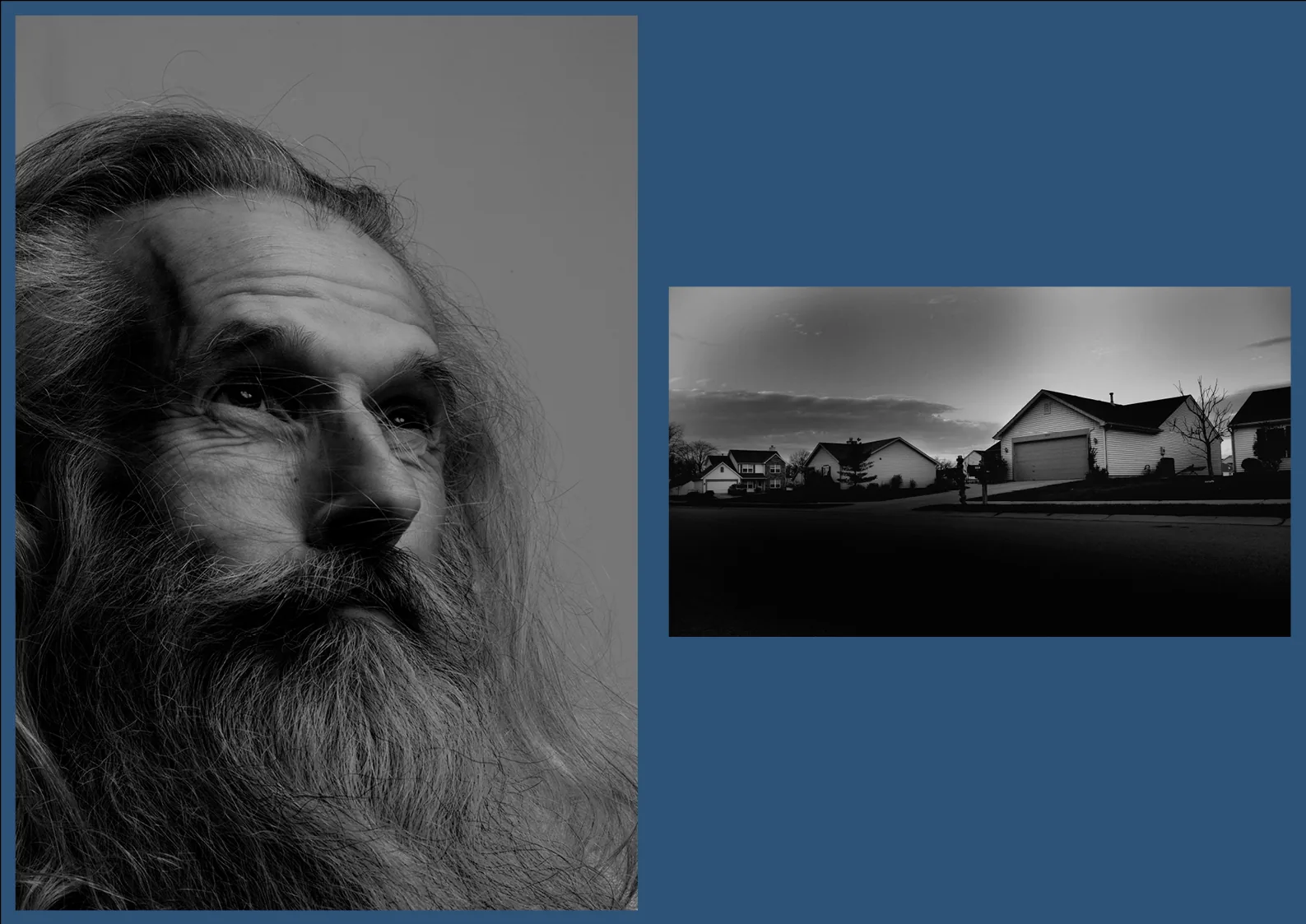
The photographs were made at different times and in different contexts. Portraits, suburbs, interiors, objects and natural landscapes are brought together as diptychs or triptychs. They do not illustrate a pre-written story or offer a didactic explanation. They produce correspondences: a posture may echo the direction of a road, the fold of a garment a fracture in the ground, a gaze an empty area in the adjacent image.
Diptychs and triptychs: a narrative entrusted to the viewer
The title speaks of tales, in the plural, but imposes no plot. The narrative emerges in the interval between images and is completed by the viewer. The human being is not simply placed inside the landscape: figure and place remain distinct, juxtaposed and questioning one another. The project therefore concerns portraiture as much as the ways in which we construct identity, memory and belonging.
This structure also makes the method legible: each photograph retains its autonomy, yet the montage generates a further meaning. The work does not erase the documentary origin of the photographs; it relocates it within a composition that belongs to contemporary art.
Colour as a threshold
Martusciello identifies the colour field as a decisive element, describing it as a frame that does not necessarily enclose, but highlights
. The colours are low in saturation, at times close to neutral. They do not decorate the diptych or compete with the photographs: they create a perceptual threshold, hold distant images together and direct attention towards their shared vibrations.
Colour thus becomes a third presence alongside figures and landscapes. It introduces a painterly quality without turning photography into painting, and makes visible the boundary between what lies within the frame and what remains outside it.
Why the interview still matters
Years later, the conversation retains its value because it independently documents the maturation of a visual language and makes its choices, references and continuity explicit. For anyone researching the work or considering an acquisition, a signed critical source goes beyond a curriculum: it shows how a series is formed, which questions it addresses and how it differs from commercial commissions.
The Invest in Art page brings together reading criteria, sources and practical information for understanding the practice before buying. The Tales of Humans in a Landscape artwork record documents medium, size, uniqueness, price and availability; other photographs can be found in the fine-art photography viewing room. Cultural and documentary value is not a promise of financial return; it is the basis for an informed, personal choice.