In brief: when a word enters a painting, it no longer works as it does on a page. It can be read, but it is also form, rhythm, matter and interruption. It does not necessarily explain the image: sometimes it contradicts it, wounds it or makes it harder to forget. This is what happens in Jean-Michel Basquiat’s Hollywood Africans, and it is the question that brings me back to Inside I’m Free, a work from my Cycle of Rooms.
Hollywood Africans: the word that makes itself visible
The Whitney Museum of American Art currently presents Hollywood Africans in its collection. Basquiat painted the work in 1983 during an extended stay in Los Angeles. Across its large yellow field appear the artist, Toxic and Rammellzee, together with dates, symbols and words that question the stereotypes assigned to Black people by American cinema.
The text is not a caption added to the painting. Some words are isolated, others circled, repeated or struck through. The Whitney records Basquiat’s explanation: “I cross out words so you will see them more.” Erasure does not remove information; it creates friction and forces the eye back to the point that seemed to be denied. The word becomes an image when it ceases to be transparent.
The MoMA research record on Basquiat also stresses the importance of words: they could carry implicit meaning or cut into, almost scar, the surface of canvas and paper. The linguistic mark therefore keeps two lives. It says something and, at the same time, does something to the painting.
An archive of music, history and language
This tension is not confined to one work. In Horn Players, held by The Broad, names and references to Charlie Parker, Dizzy Gillespie and Ornithology participate in the painting’s improvised structure. The rhythm of the words does not illustrate jazz: it behaves like jazz, through repetition, variation and deviation.
The official Jean-Michel Basquiat archive brings together catalogues and studies that reconstruct this layered language through notebooks, drawings, paintings and rarely seen material. The catalogue of King Pleasure, the exhibition organised by Basquiat’s family, includes more than two hundred works, documents and objects. It is a useful reminder: an artist’s visual vocabulary does not emerge from a formula, but from an archive of reading, music, daily life, history and memory.
When words and images disturb one another
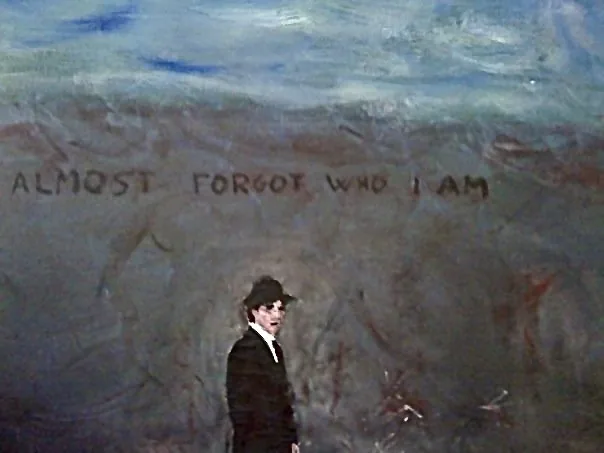
A sentence inside a painting opens at least three possibilities. It can guide interpretation, like a title that has entered the work. It can destabilise it, because what we read does not coincide with what we see. Or it can become pure matter: a sequence of letters that weighs as much as a line or a field of colour.
It is this third space, between understanding and disturbance, that interests me. A sentence that is too legible risks closing the painting; one that is merely decorative loses its necessity. The living point is where words remain recognisable but do not solve the image. Painting holds them and, at the same time, calls them into question.
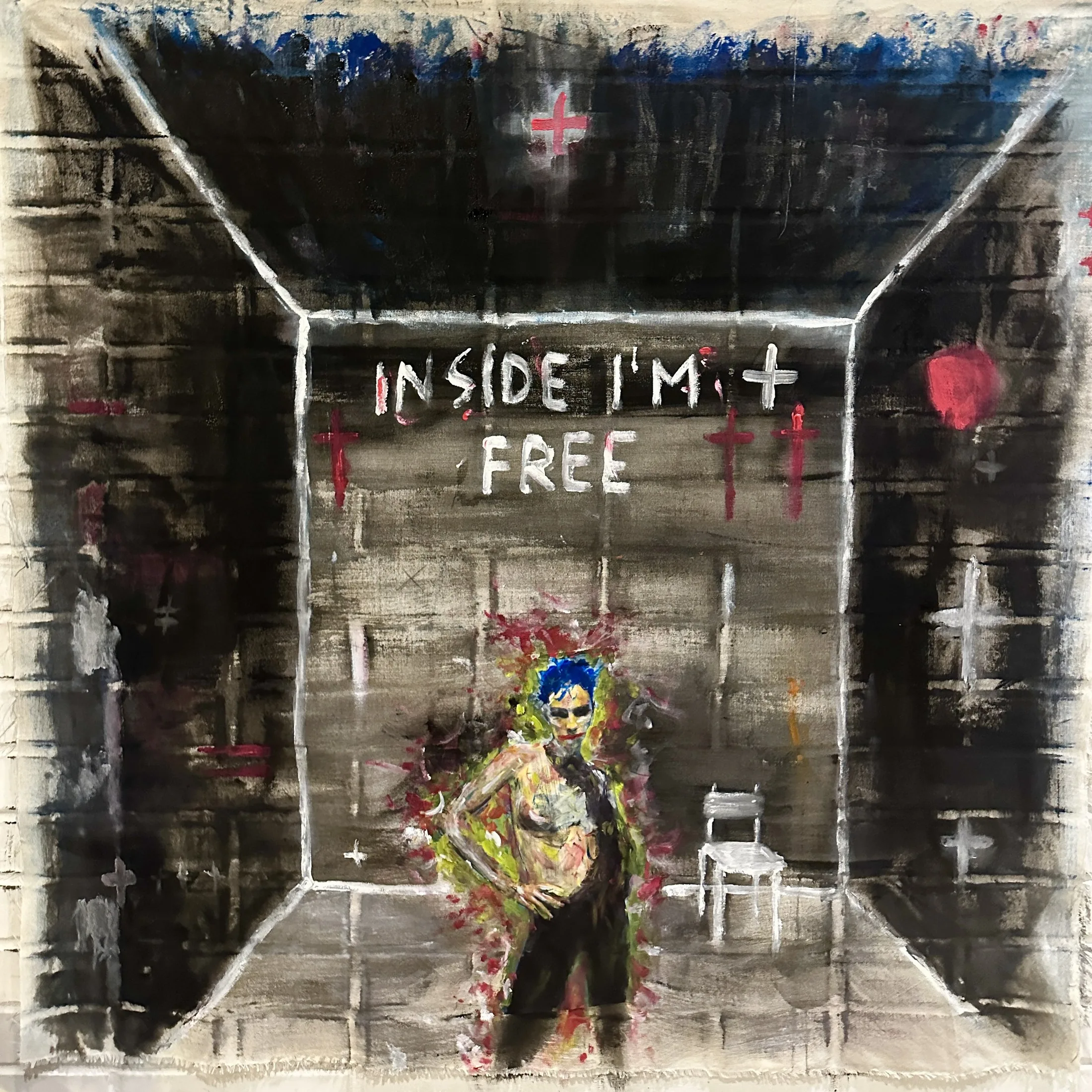
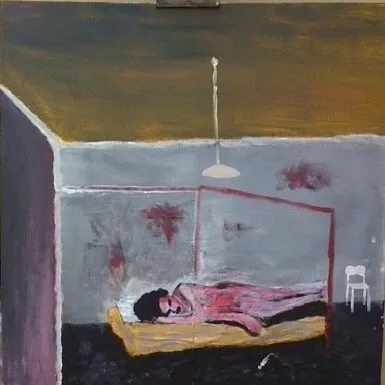
Inside I’m Free · Cycle of Rooms · 13
Massimo Scognamiglio · Mixed media on canvas · 80 × 80 cm. The painted sentence enters the room as a presence, not as an explanation.
Inside I’m Free: a sentence inside a room
In Inside I’m Free, the sentence occupies the centre of the wall, above a figure compressed into the lower part of the painting. White lines, dark fields, crosses and openings construct the room; the text seems to affirm an inner freedom, yet the space containing it appears enclosed and watched. There is no single answer: the word promises an opening while the image puts that promise to the test.
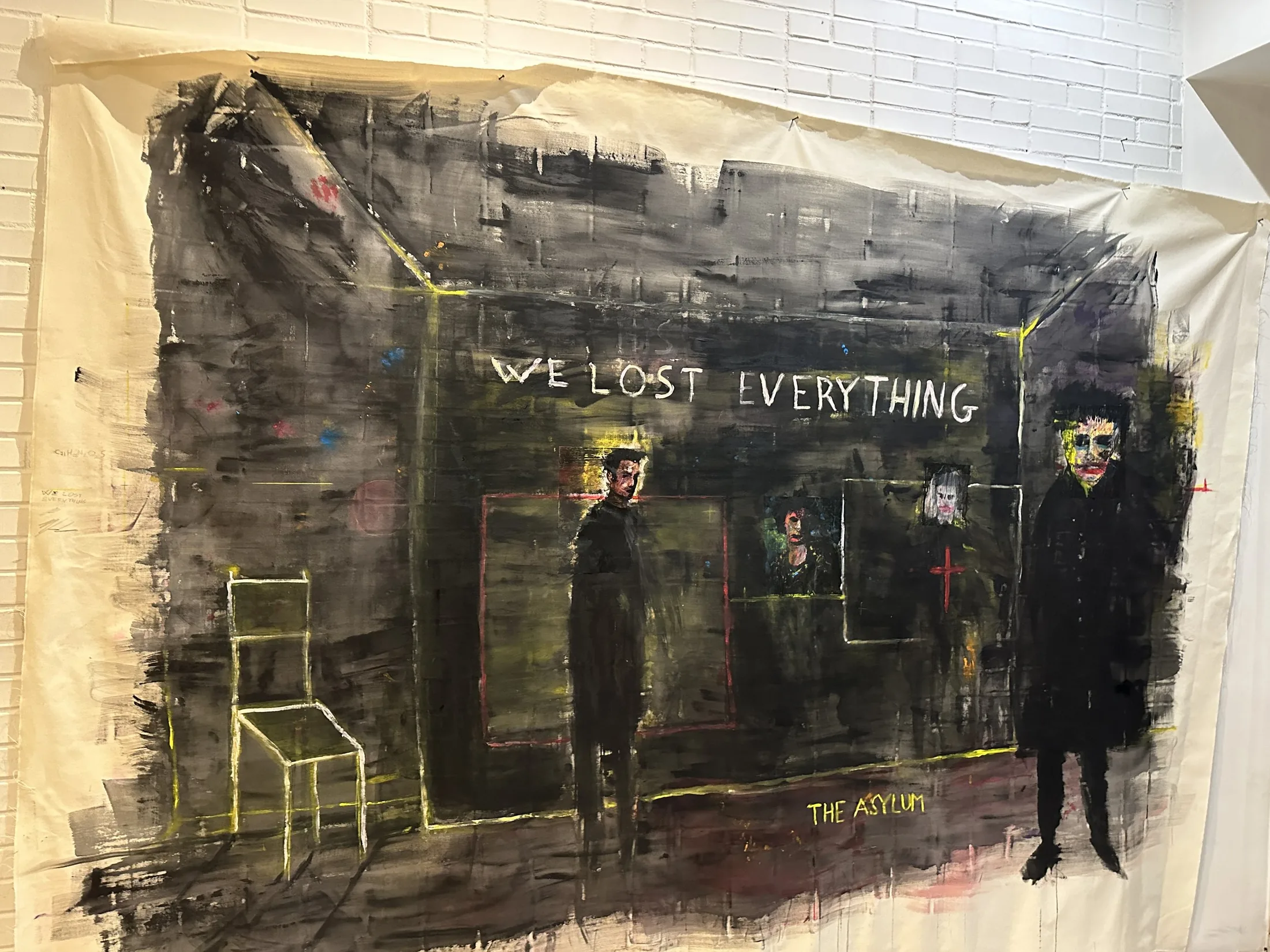
Basquiat remains a fundamental historical reference for understanding how a word can become paint, not a direct term of comparison. In my work, the sentence emerges from a different experience and vocabulary: that of rooms as psychological architectures, where body, wall and mark share the same pressure.
From one work to the Cycle of Rooms
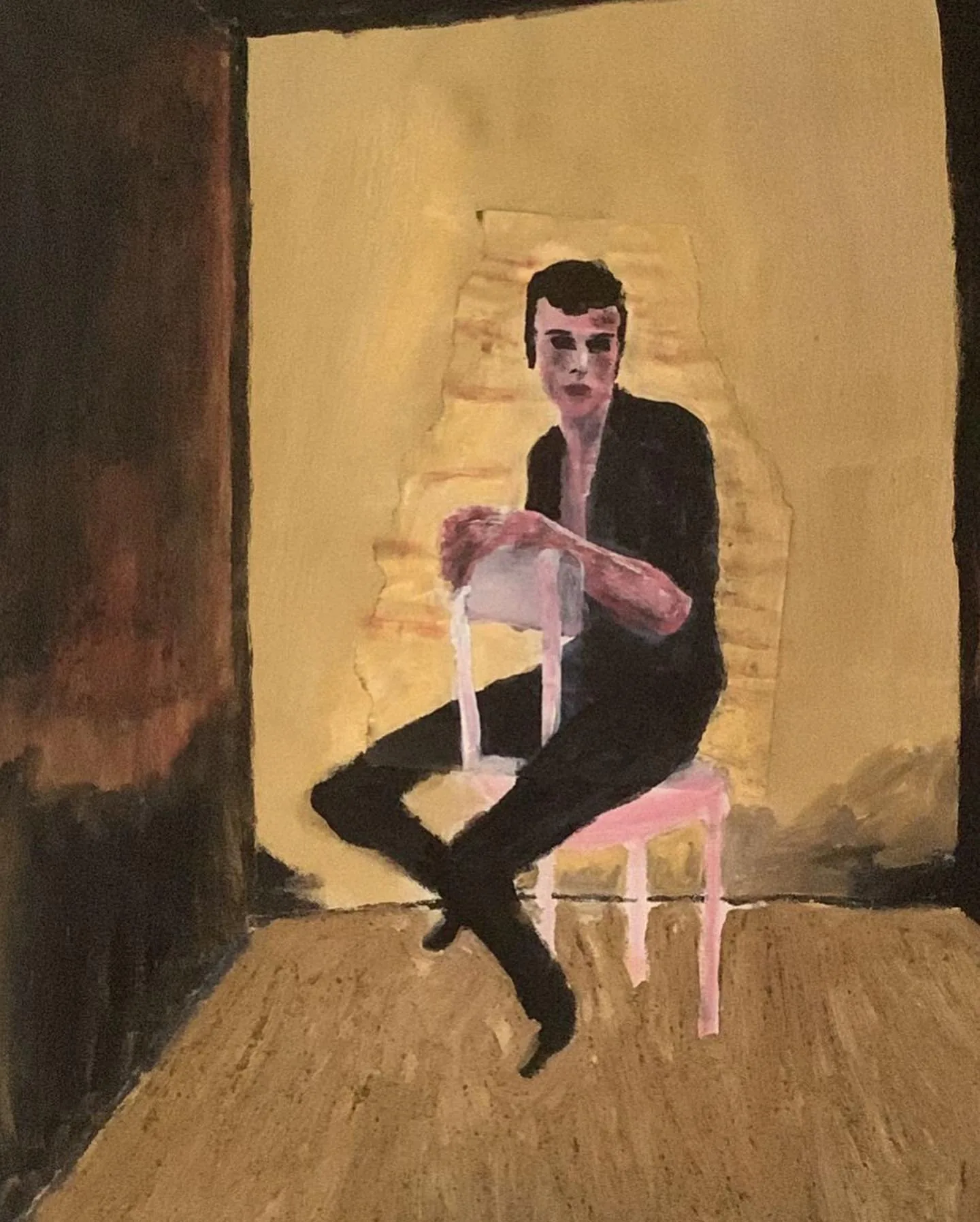
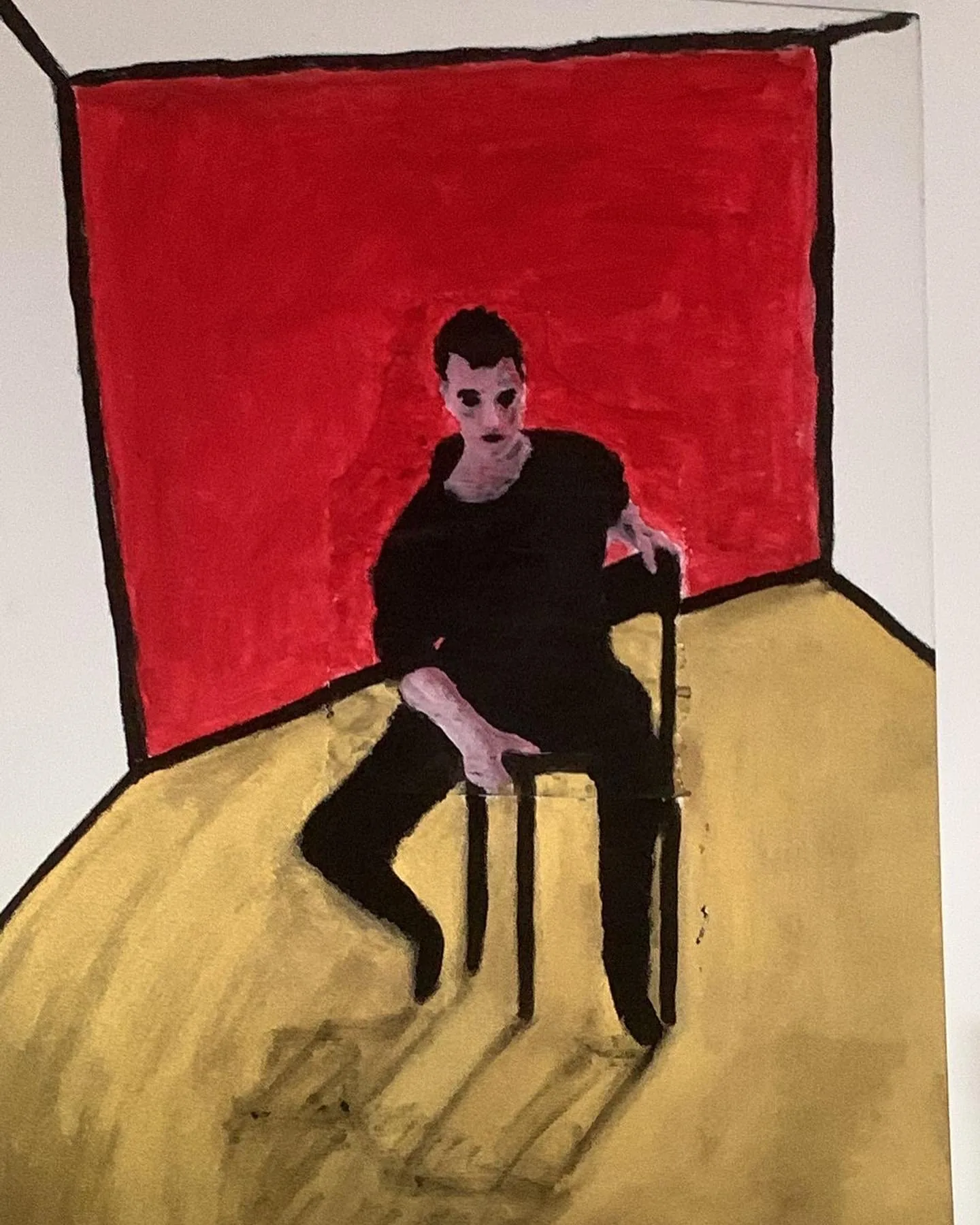
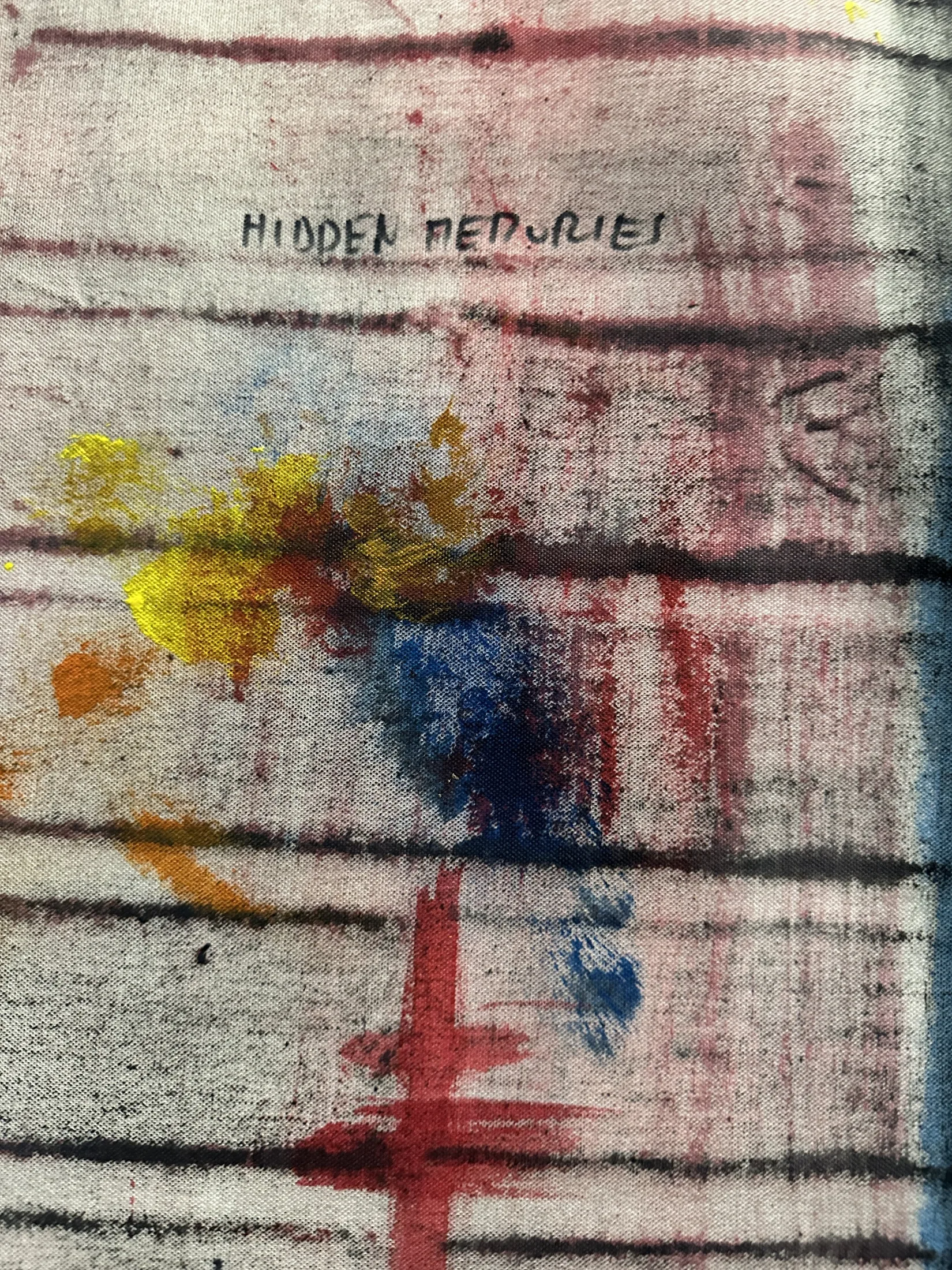
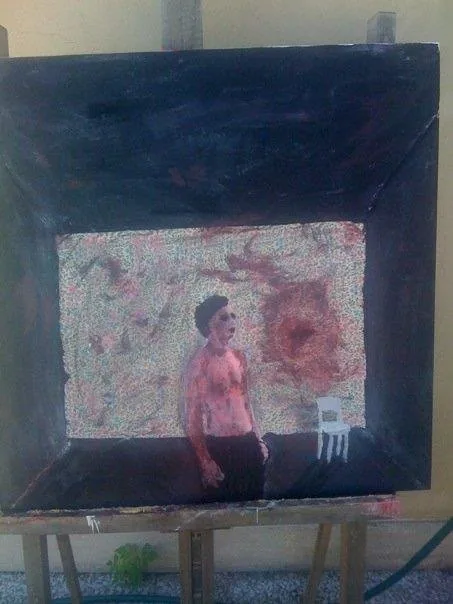
The Inside I’m Free record in the Available Works viewing room documents the work’s medium, dimensions and status. The Cycle of Rooms page places it within a broader research project, begun in 2008 and still open: interiors in which chairs, walls, bodies and words do not describe a house, but make a mental condition visible.
Text inside a painting works when it does not close meaning. It remains a threshold: clear enough to be read, ambiguous enough to keep looking back at us.