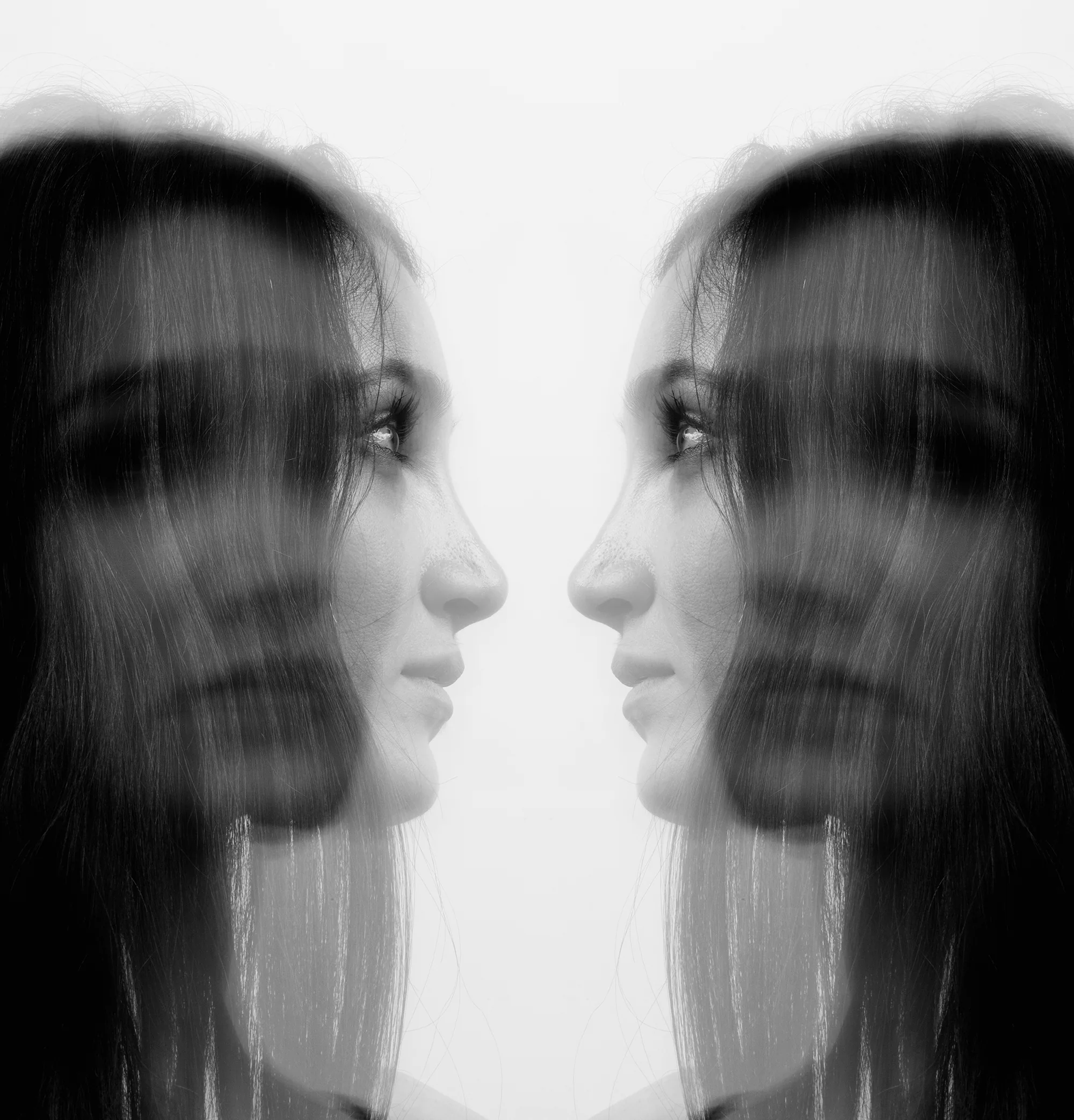
A portrait is supposed to return a face to us. Francis Bacon spent much of his life demonstrating that this promise can be false: someone may become recognizable at the very moment painting destroys their likeness.
From October 2024 to January 2025, the National Portrait Gallery in London devoted an exhibition to this problem. Francis Bacon: Human Presence brought together more than fifty works spanning the 1940s onwards: self-portraits, friends, lovers and responses to figures from art history. Lucian Freud, Isabel Rawsthorne, Peter Lacy and George Dyer appeared among the sitters. Some of the larger paintings also served as memorials to people Bacon had lost.
The detail closest to my own work is Bacon’s relationship with photography. The exhibition material explains that he often preferred to work from photographs, including images commissioned from the former Vogue photographer John Deakin. Those photographs could be torn, folded and crumpled. They were not pristine models waiting to be copied, but objects already altered by time and handling.
In my Mindful Portraits, I begin at the opposite end: with the actual presence of another person and the quality of the encounter before the shutter is released. In the Strappi, I return instead to images that have already had a public life, often in fashion. I tear and paint them because their perfection is no longer enough. In both cases, the face is not a surface to preserve. It is a place where something resists and something escapes.
The National Portrait Gallery’s title, Human Presence, shifts the question with precision. Presence is not the same as anatomical accuracy. It may inhabit the twist of a mouth, the distance between two figures or an empty space that seems to hold someone after they have disappeared.
Bacon does not interest me because he provides a formula to imitate. He interests me because he takes portraiture close to failure and makes it necessary there. If a photograph or painting can never truly possess a person, it can at least register the pressure that person exerts upon the image. Everything else—identity, memory, fear, desire—remains mobile. Perhaps that is what keeps a face alive after we have stopped recognizing it.