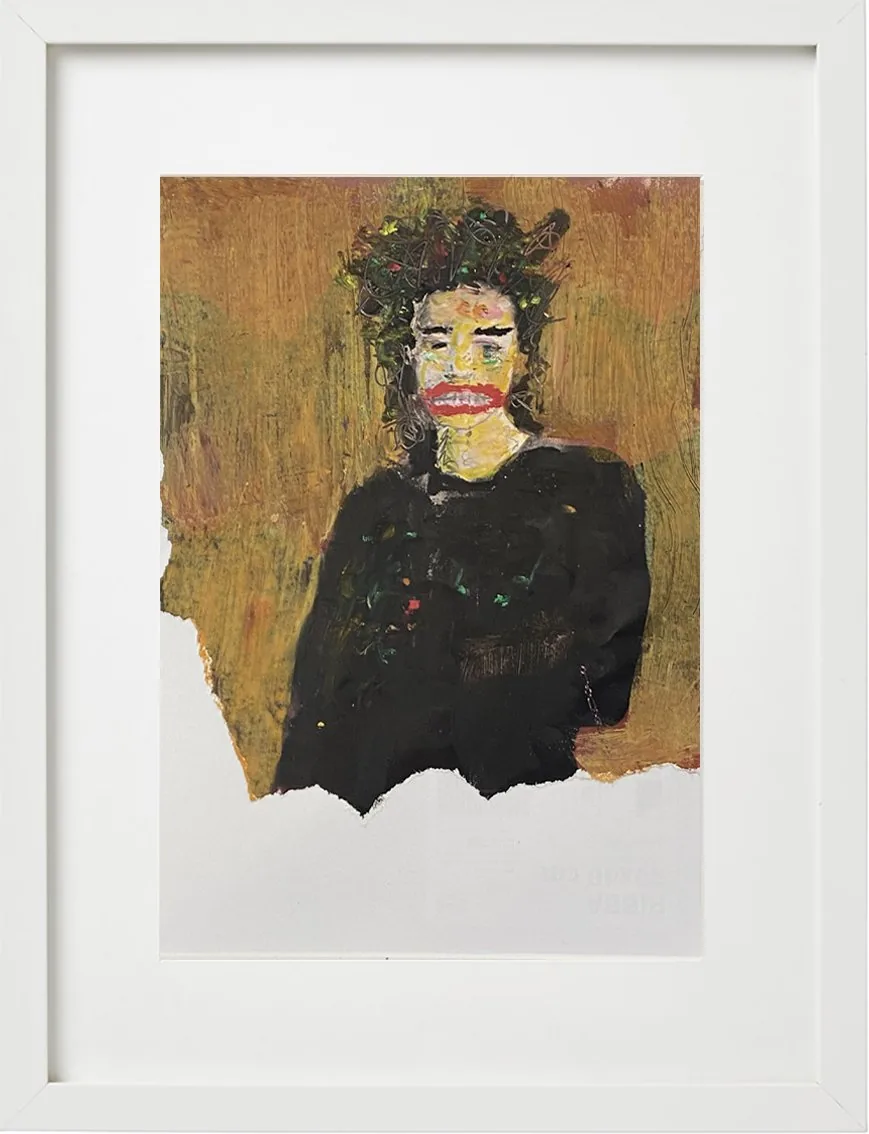
In 2021, for the exhibition Strappi e Profezie, I turned the rooms of Casa 94 into an imaginary psychiatric ward. I was not trying to simulate therapy, nor to make distress more palatable. I was interested in the moment when an image ceases to be decoration and makes the viewer remain in front of something they would rather avoid.
That is why a recent announcement from WHO Europe caught my attention. With support from the European Union, the organization is working to integrate art and culture into the healthcare systems of Armenia, Azerbaijan, Georgia, the Republic of Moldova and Ukraine. The programme runs for three years and also addresses mental health, trauma, social isolation and long-term stress.
The important word here is systems. This is not about hanging a few paintings in a hospital corridor and declaring the problem solved. The working groups are mapping initiatives that already exist, connecting ministries, healthcare professionals, artists and researchers, and developing criteria for designing and evaluating interventions.
The examples cited by WHO are very concrete: a museum visit can be used to address loneliness; dance can accompany work with people living with Parkinson’s disease; music can have a place in dementia care; a choir can support people with respiratory conditions. They are not magic formulas. They are different practices for different needs.
There is also a body of research behind this work. In 2019, WHO Europe published a review of more than three thousand studies on the relationship between art, health and well-being. The evidence it gathered concerns prevention, health promotion and the management of illness throughout life. It is a broad and uneven field, but substantial enough for institutions to stop treating it as a marginal curiosity.
None of this licenses easy slogans. Art does not replace doctors, psychologists, medicine or social services. Nor must every work be reassuring in order to have value. Sometimes a work matters precisely because it unsettles us, breaks an orderly image and makes visible a wound that everyday language had covered over.
In the Strappi, I begin with photographs already polished by fashion and advertising. I tear them, reassemble them and paint over them. The faces remain exposed, but lose the promise of perfection with which they were sold. It is my way of speaking about identity, fragility and distress without turning those who suffer into subjects to be observed from a distance.
If art truly enters healthcare, it should preserve that freedom while accepting the responsibility of the context in which it is used. It requires listening, ethics, evaluation and access. The WHO announcement matters because it tries to hold these things together. It does not give art the task of healing the world. It finally recognizes a place for it in the way we care for people.