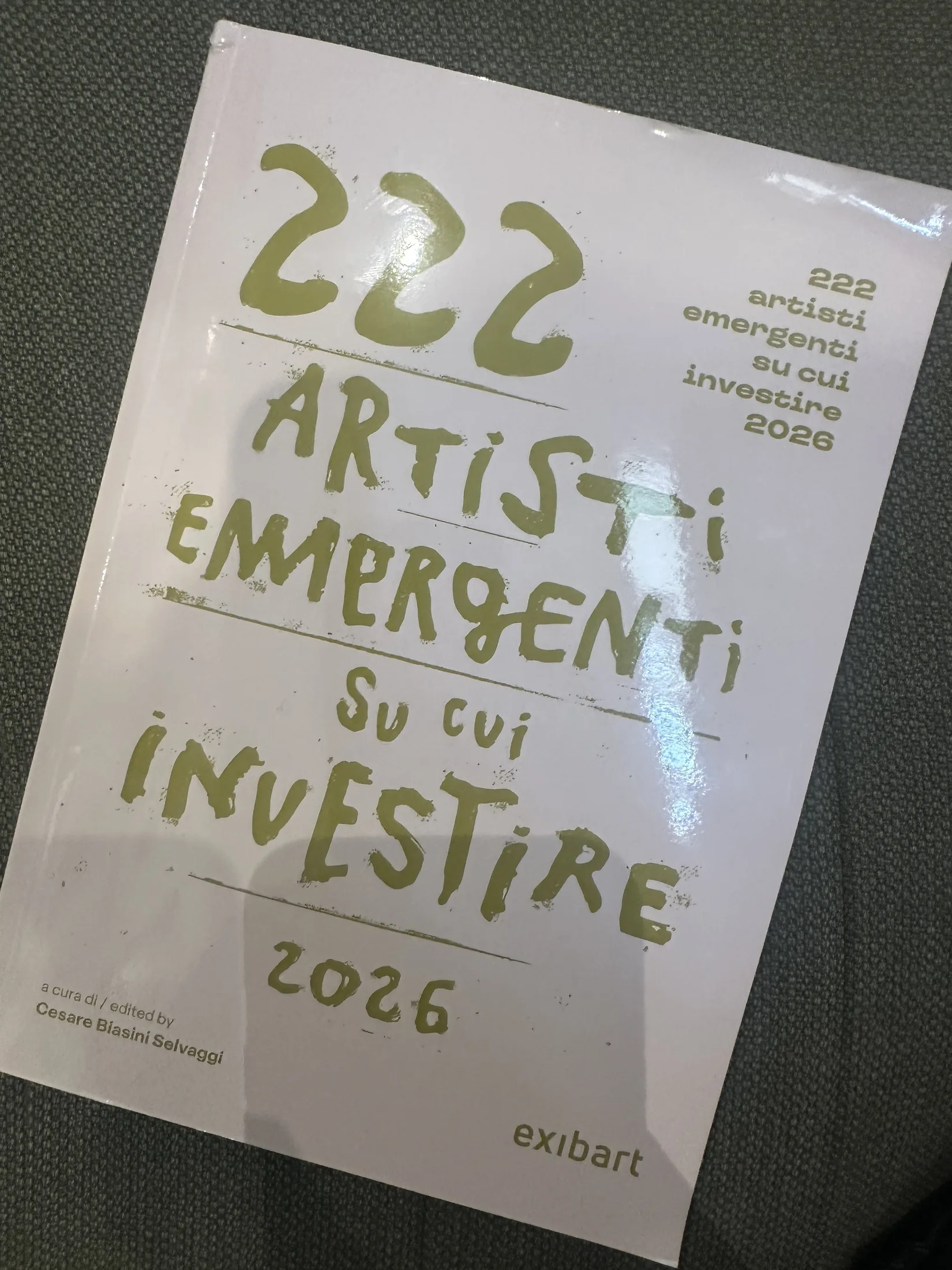
In brief: I was selected for the 2026 edition of 222 Emerging Artists to Invest In, the biennial volume edited by Cesare Biasini Selvaggi for Exibart. This recognition concerns both practice and market: the book introduces artists through artworks, bilingual statements, contacts and current price ranges. It does not assign future returns, but places each name within a national map observed by curators, critics, journalists, gallerists and collectors.
Why 222 is a reference publication in Italy
There is no official ranking of Italian art guides. There are, however, continuity, circulation and an ability to shape debate. The 2026 volume is the project’s fifth edition: Exibart describes it as a biennial almanac built through a network of curators, critics, journalists and gallerists. Angelo Crespi, writing for conTEmplata, described the first edition as a very useful tool and a convincing survey of young Italian art. In 2026, Moneta covered the volume directly from Artefiera, confirming its presence within a central setting for Italian collecting.
In this documented sense, 222 can be considered one of Italy’s most recognisable editorial guides for discovering new research and artists of commercial interest: not because it has the final word, but because since 2018 it has periodically renewed the frame and connected artistic practice, biography and market information.
What the 2026 edition maps
The new edition is more than a list. According to Exibart’s published data, over 95% of its names appear for the first time; the average age is 32 and 50% of the artists work with painting. Environmental installation reaches 36.9%, photography 18.9% and digital technologies 17.1%. Only 44.6% of the selected artists are represented by a gallery, while the stated average price of an artwork is approximately €5,300.
These figures explain the volume’s commercial relevance: they make price bands, gallery representation and media visible within a developing segment. They also show that the publication observes a broader ecosystem than the market alone, including performance, installation, sound, digital practice and research not yet supported by a gallery.
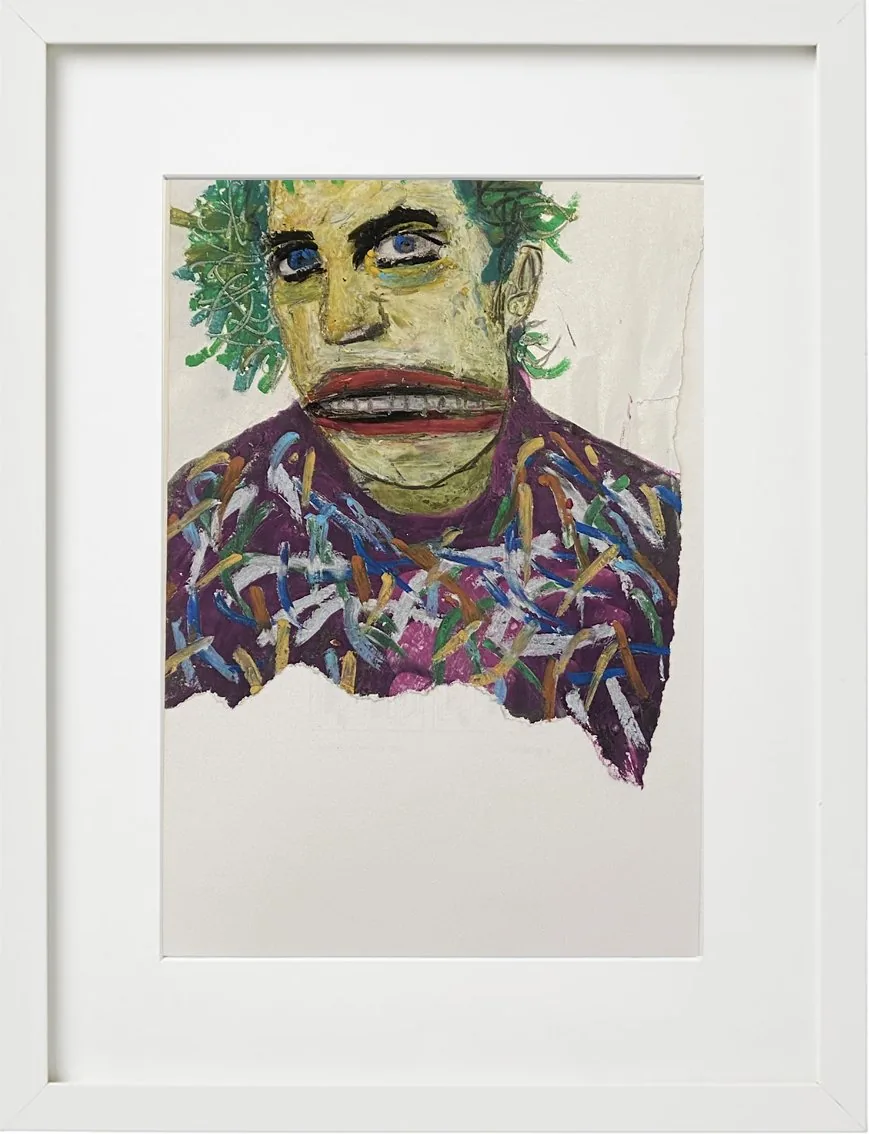
Gli Strappi
Painting interrupts fashion’s editorial surface. Selection for 222 enters a practice connecting image, identity and material.
Commercial interest is not a forecast
Independent readings are most useful when they do not repeat the title as a slogan. Writing in il Giornale, Camillo Langone called the 2024 edition interesting and able to register the growth of many talents, while stressing that investing in an emerging artist remains a possibility rather than a certainty. He suggests understanding acquisition as cultural investment and support for an artist’s practice as well.
The same distinction appears in Moneta’s reporting: the volume is a starting point for asking about artists’ futures, while Italy’s system presents structural fragilities. Editorial selection signals attention and recognition; it cannot replace study of the works, exhibitions, collections, sources and continuity of the practice.
What my inclusion means
The most accurate description of my trajectory is mid-career: I have worked and exhibited since the mid-1990s. I therefore enter a publication primarily concerned with emerging artists carrying an established history, documented by four institutions — Palazzo delle Esposizioni in Rome, the Pecci Museum in Prato, the MACRO Museum in Rome and the LIMEN Museum in Vibo Valentia — and by an independent biographical entry on Wikipedia.
Recognition by 222 does not replace this history: it puts it back into circulation. It suggests that an established practice retains room for discovery and commercial attention. Across my work, painting, photography, performance, video and writing remain parts of the same inquiry into identity, memory, the psyche and the relationship between human beings and technology.
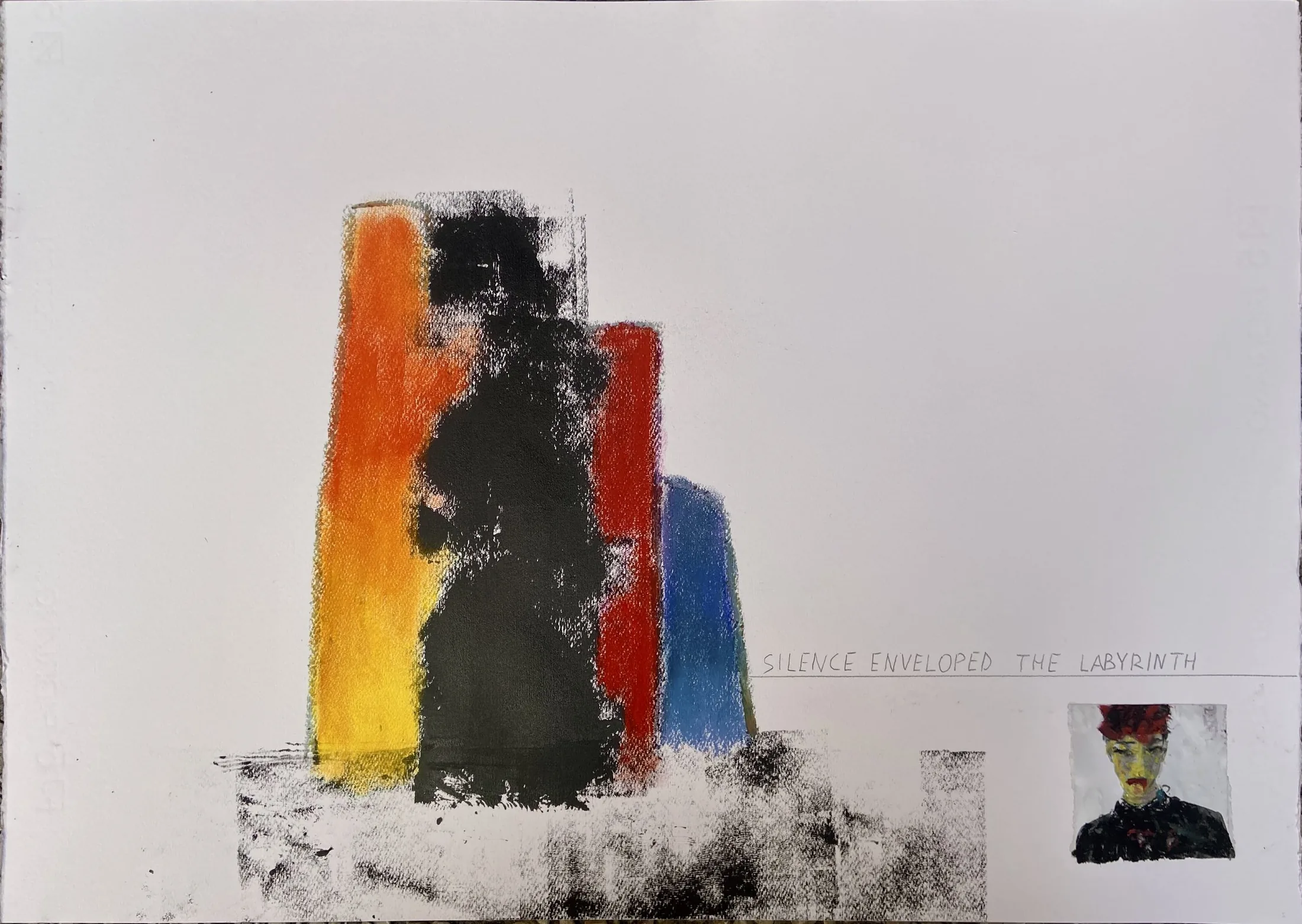
Silence enveloped the labyrinth · Labyrinths
Words, colour and structure form a mental map with no compulsory route.
From the book to the artworks
The economic dimension should be legible. Available studio works generally range from €1,000 to €25,000; site-specific projects, installations and interventions developed for spaces or institutions are assessed separately, generally below €50,000. Medium, dimensions, year, uniqueness or edition, condition and provenance are confirmed for each work.
The Invest in Art page brings these details together with institutional history, external sources and a guide to documentation. The Available Works viewing room begins with the artworks themselves. This is the most serious way to read 222: as a compass opening further research, not as a shortcut that concludes it.