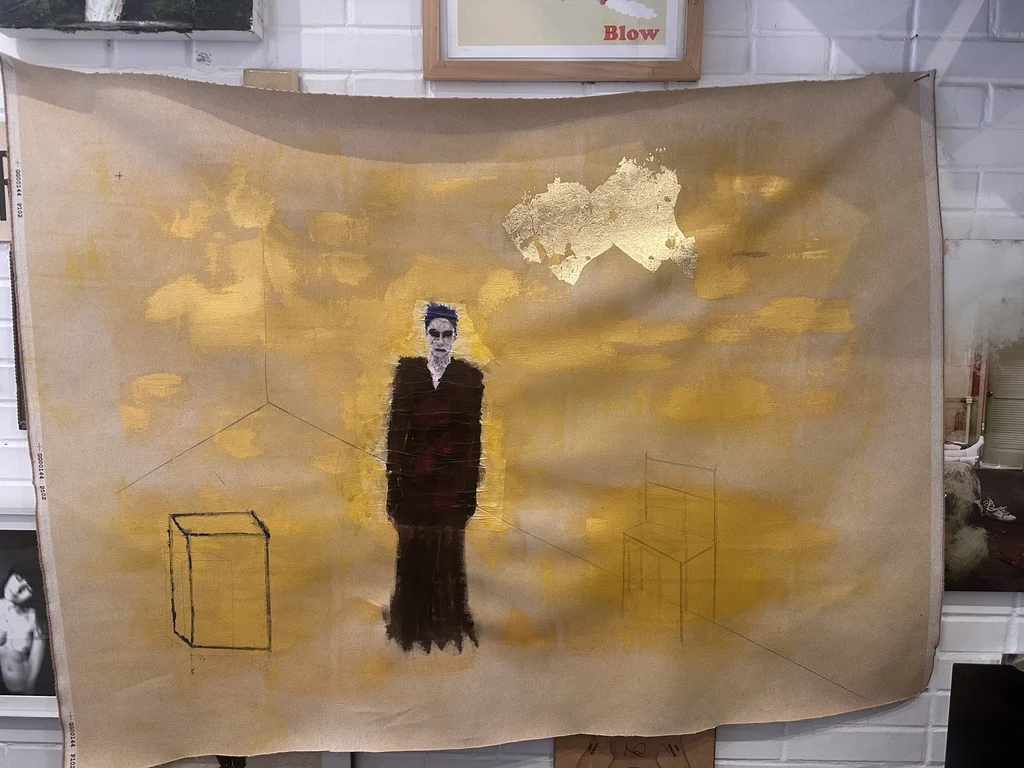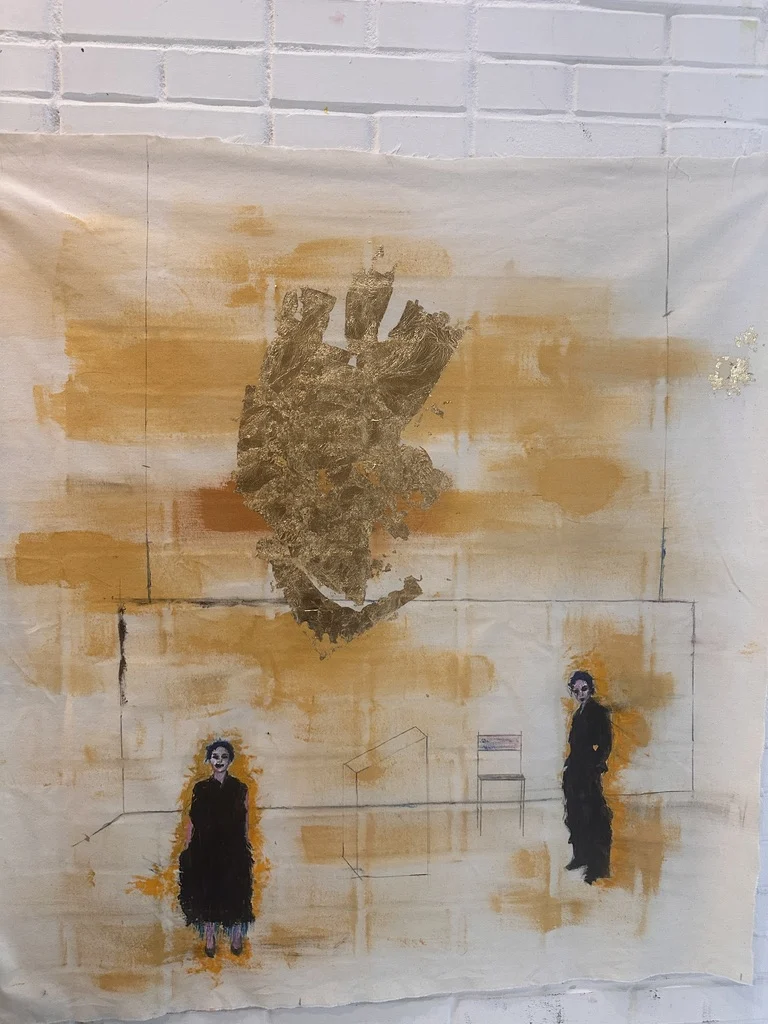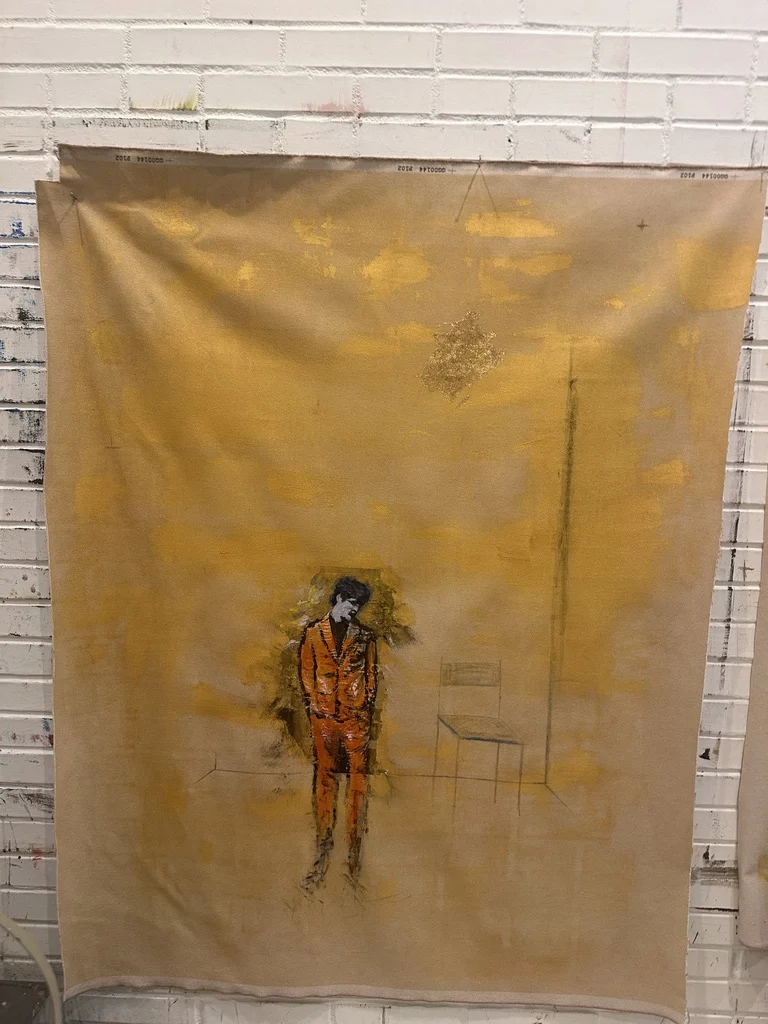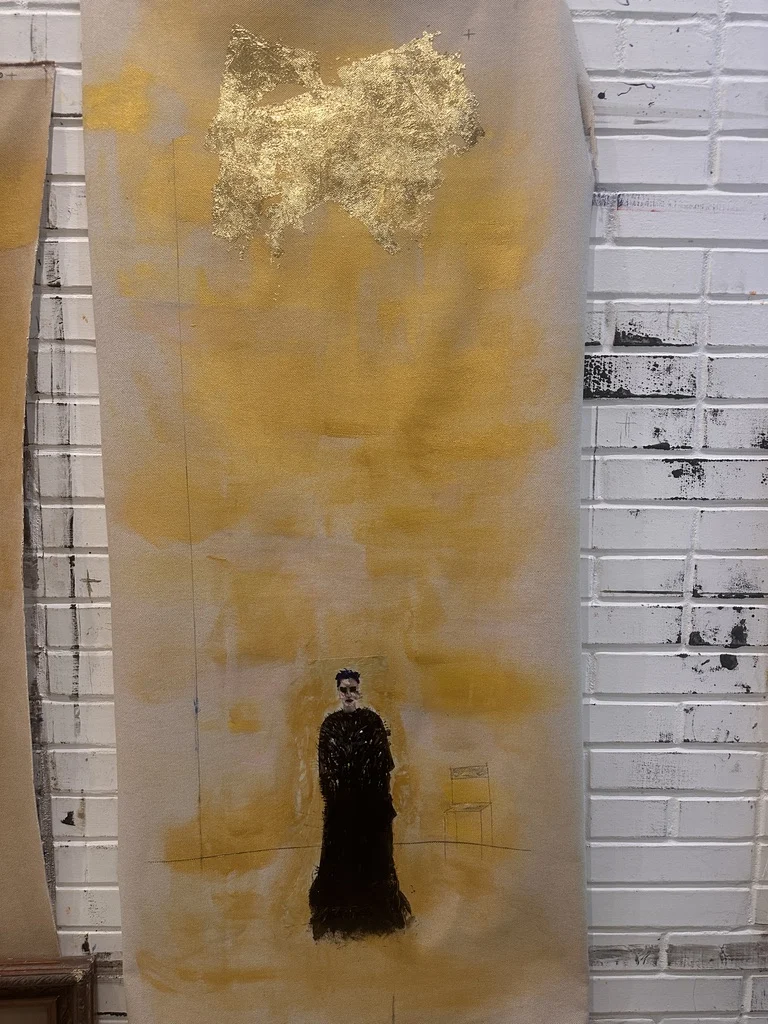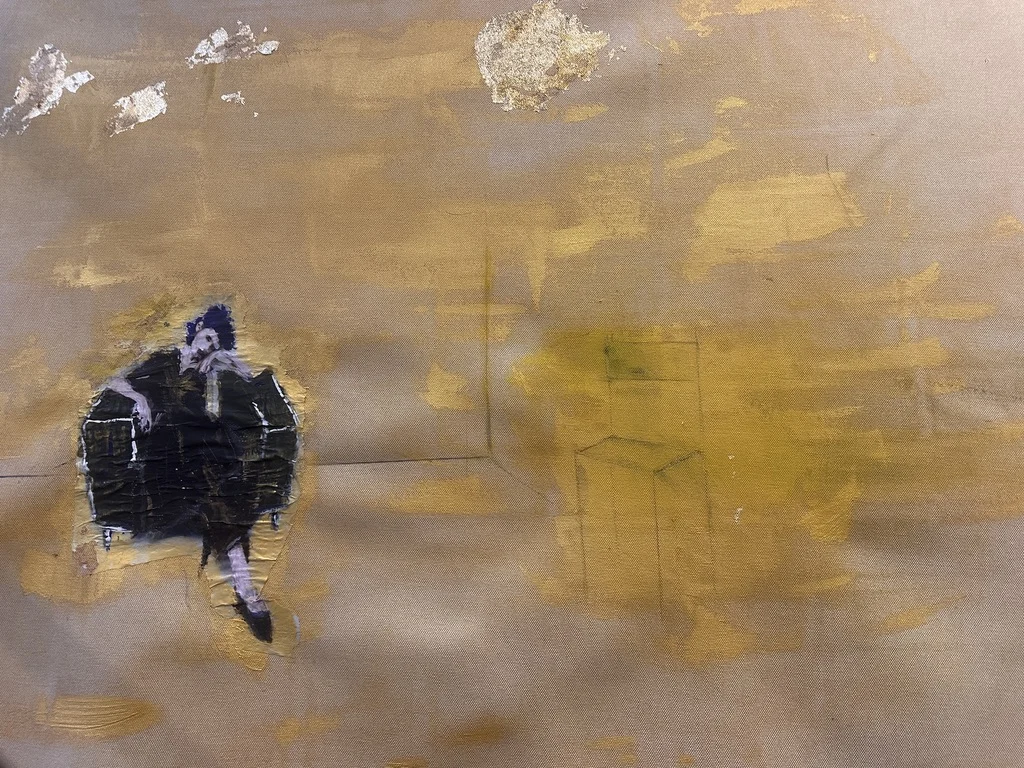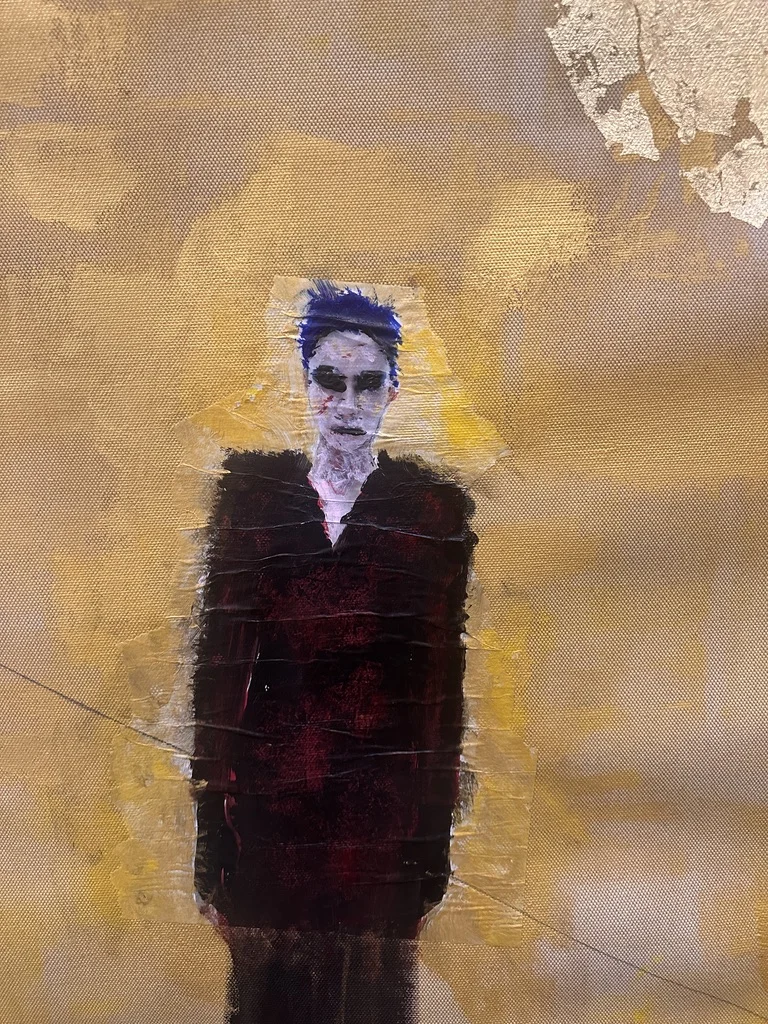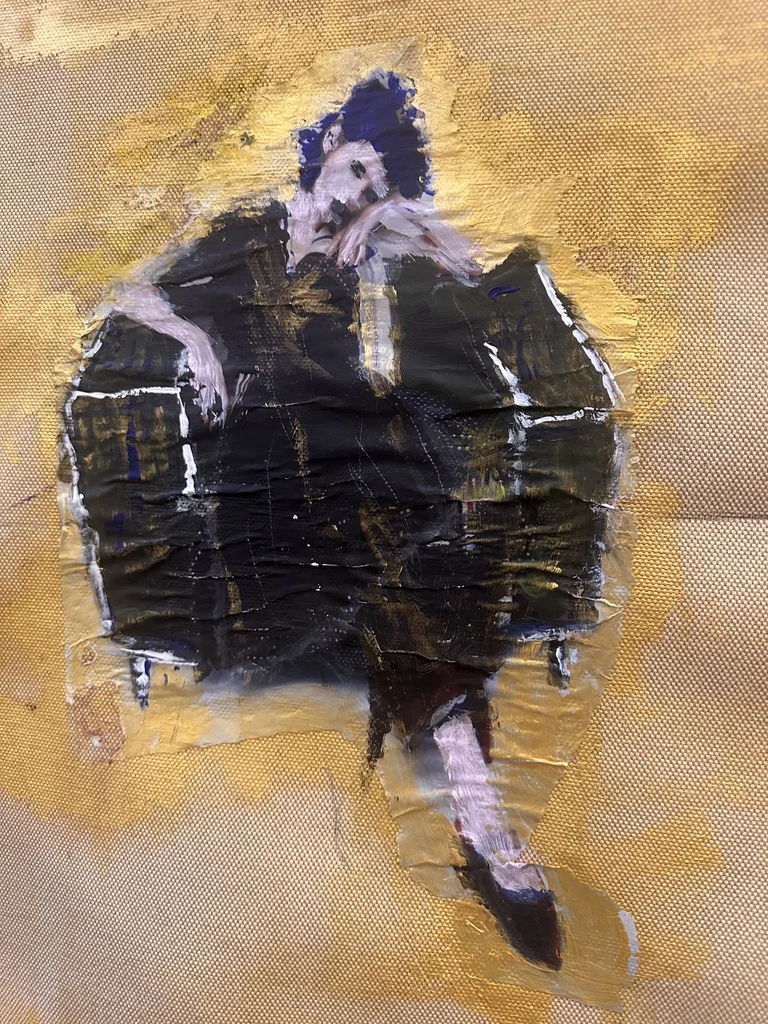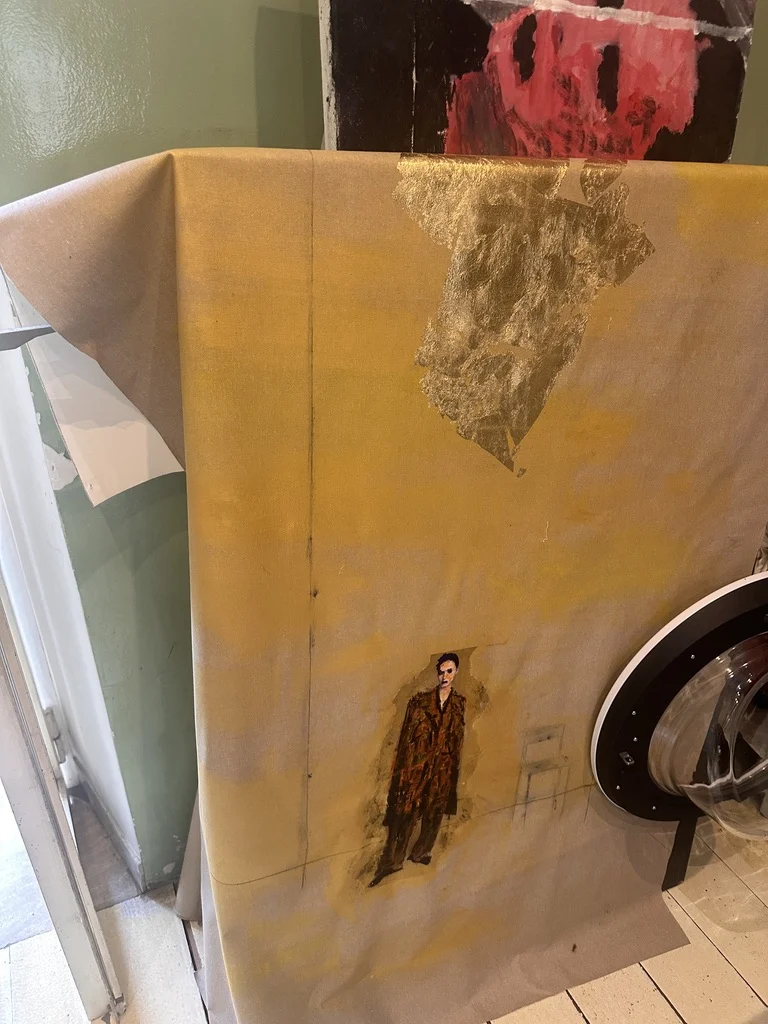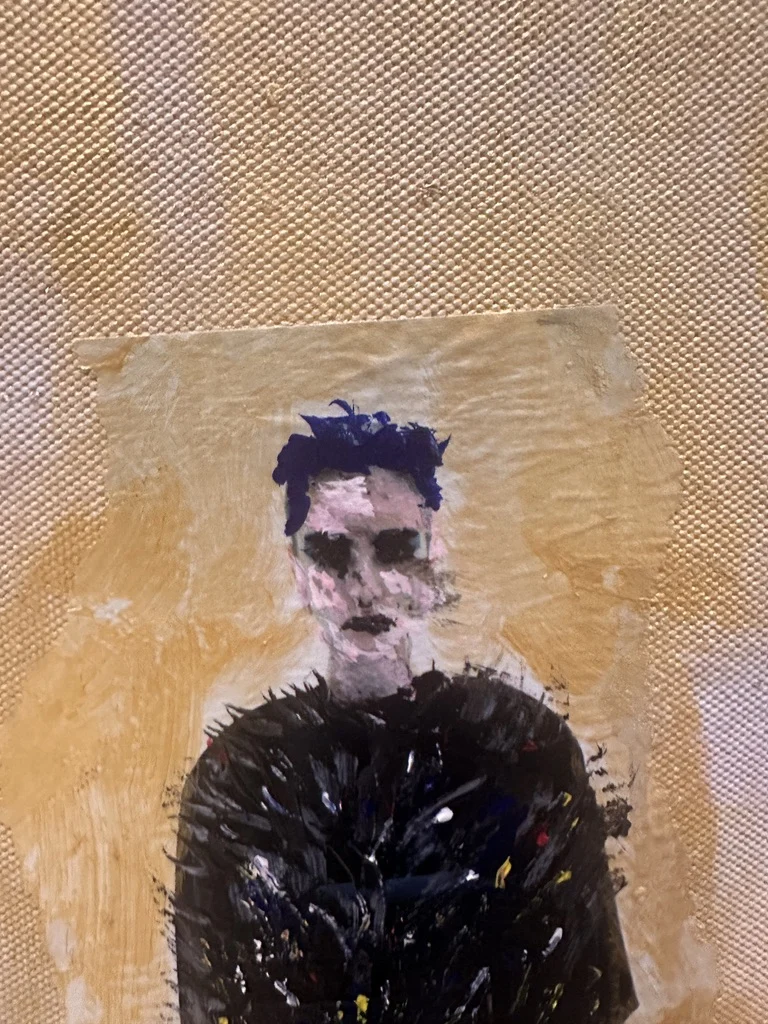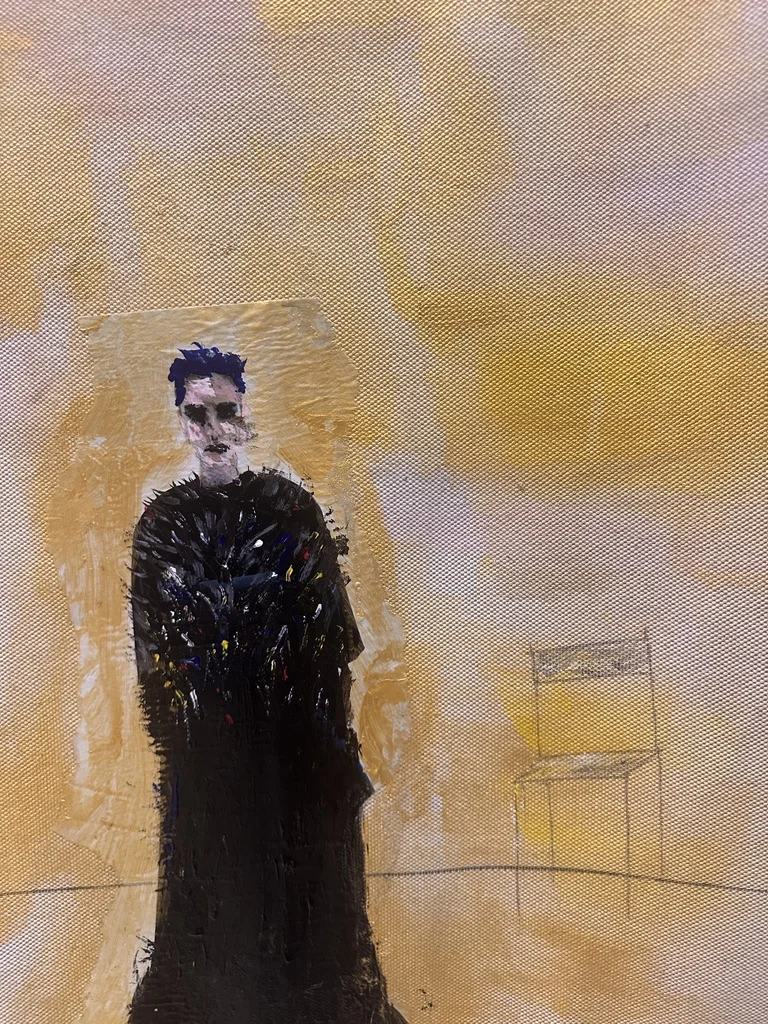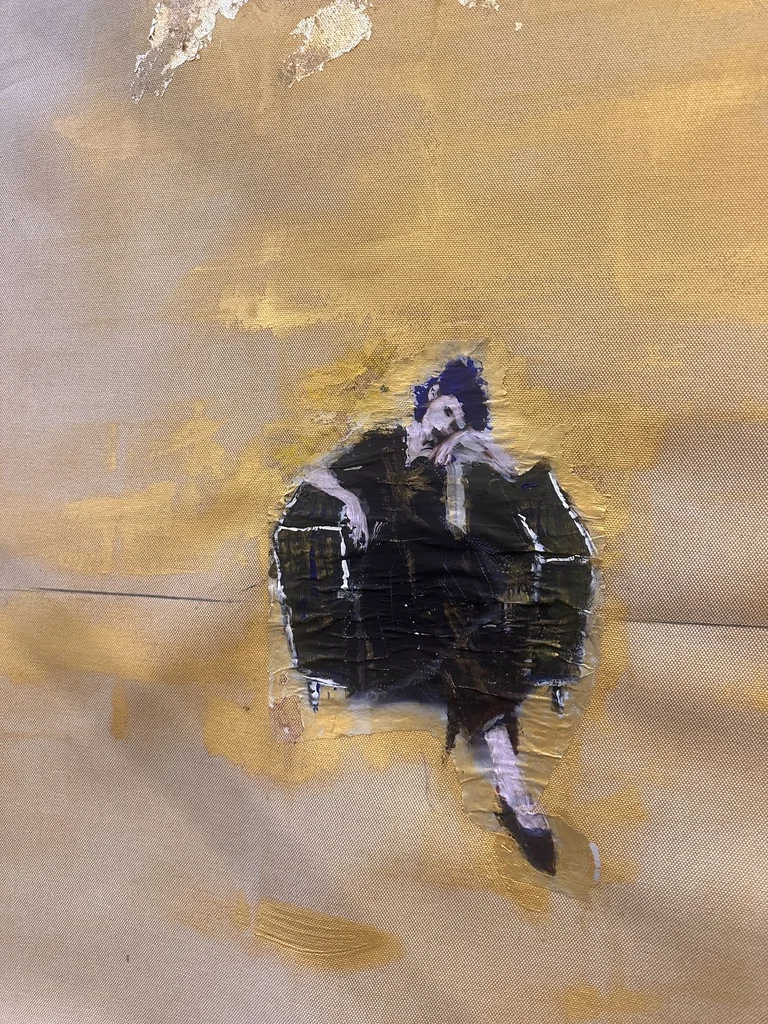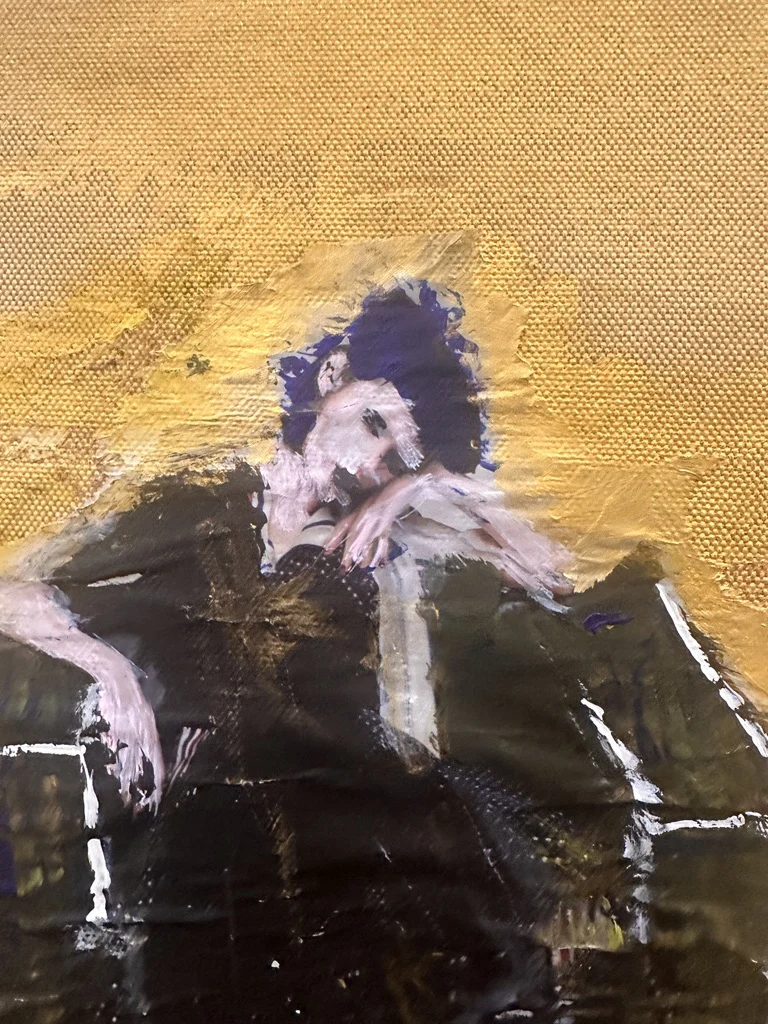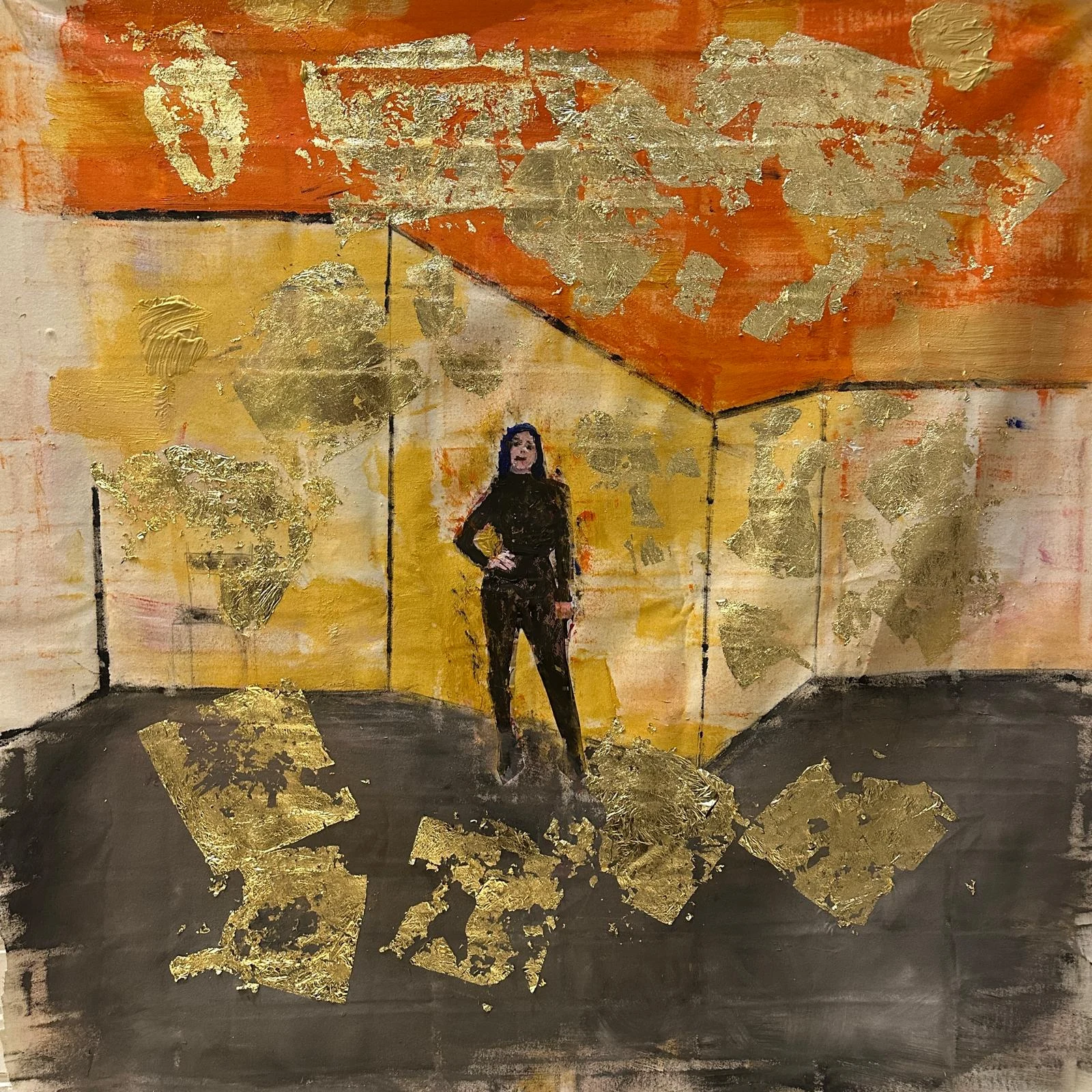
I have called this new cycle The Gold Standard. Not simply because gold runs through its spaces, but because I was searching for a measure: a ratio of things, the fragile point at which our brief lives attempt to face eternity.
Almost not painting
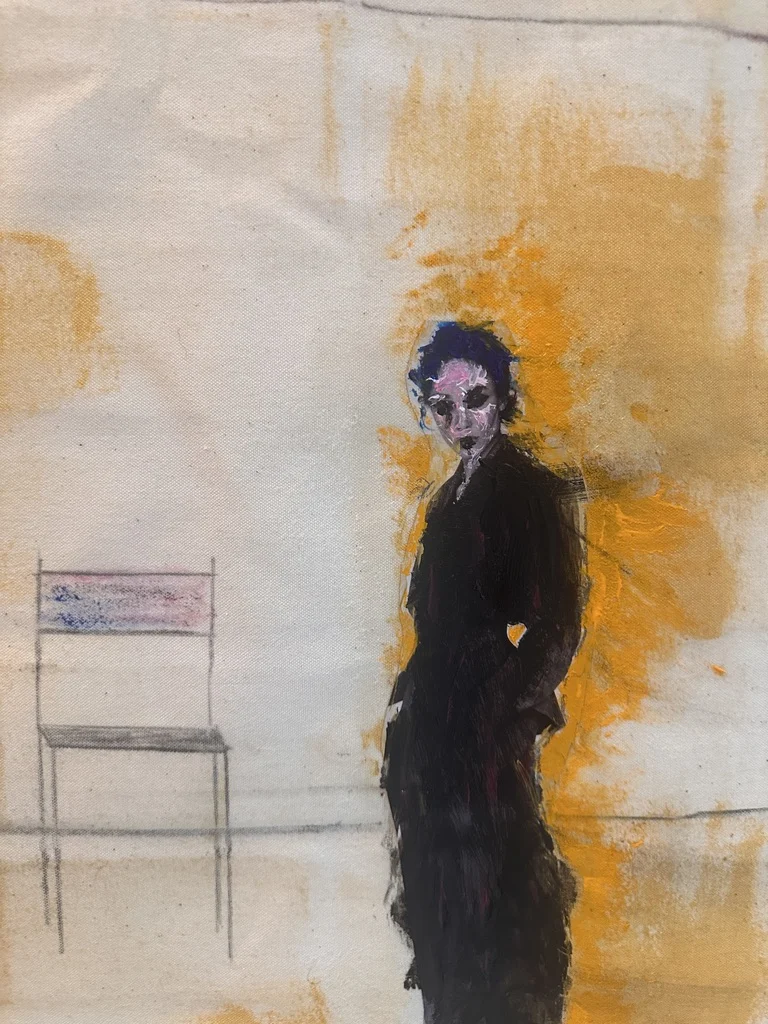
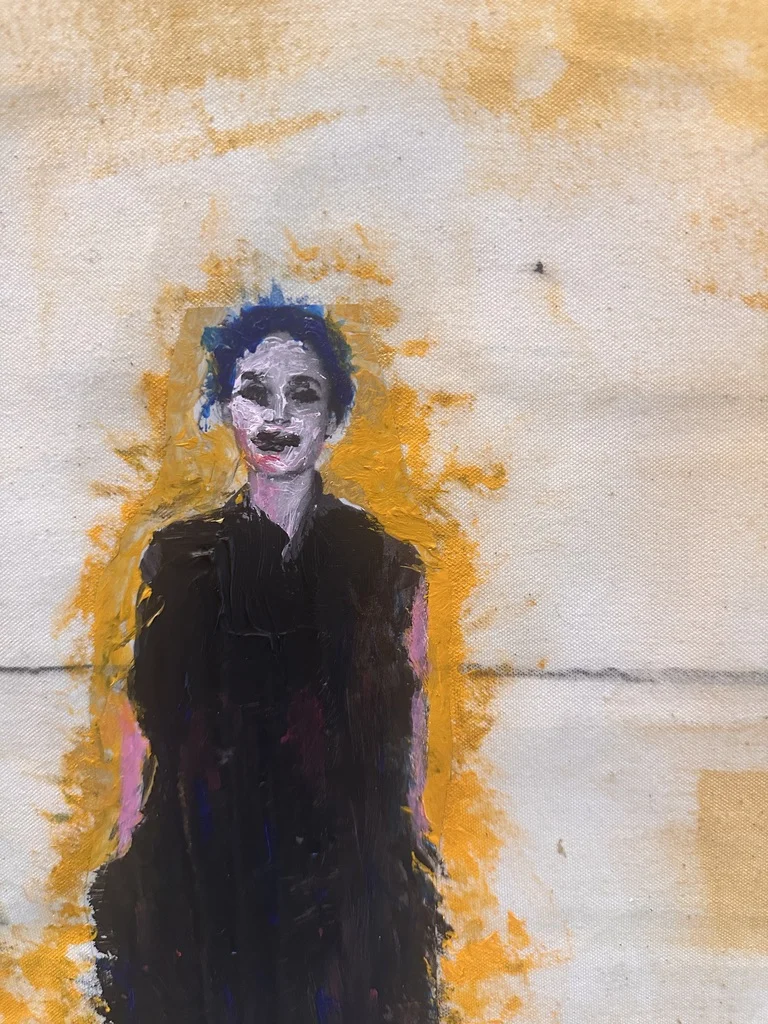
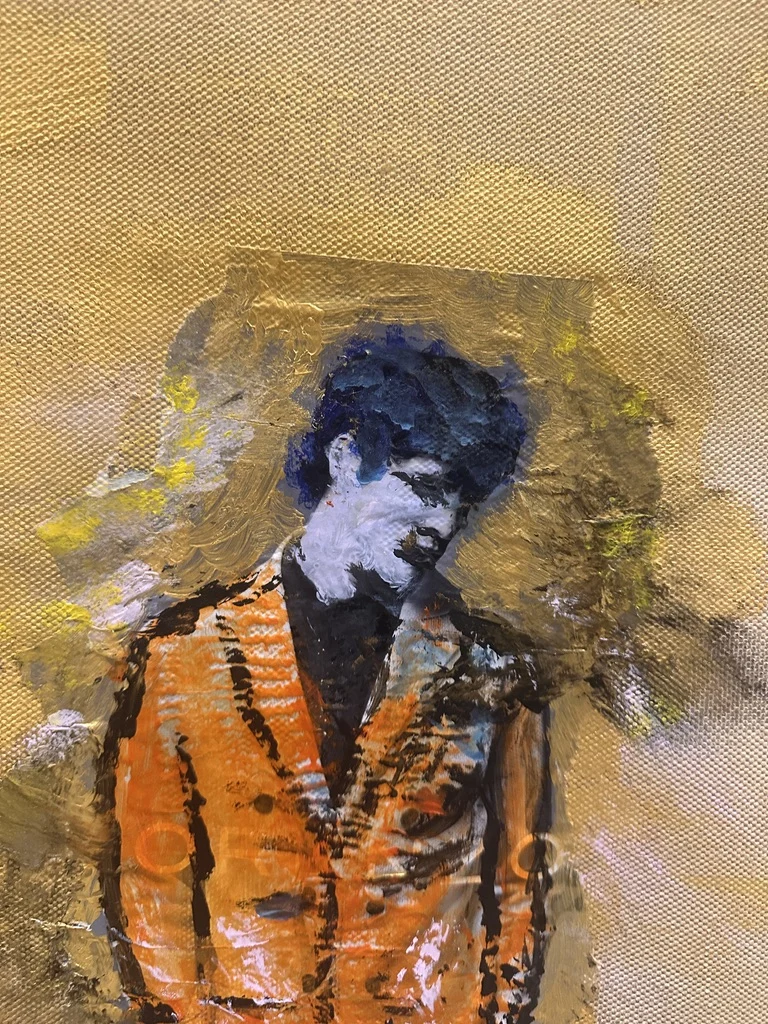
I worked mainly on fine canvases that, at first, I almost did not paint. I found them noble and beautiful already. Covering them would have been easy; listening to them was harder. I allowed the weave to remain visible and let painting enter without erasing it, like a presence that does not claim to possess the entire space.
It is an act of reduction, not renunciation. After years of symbolic explosion, density and accumulation, I felt the need to return to synthesis. Some images revisit questions I opened fifteen years ago in the Cycle of Rooms; today I see them with a different sensitivity and strip them back further. The relationship between a pre-existing image and a handmade intervention, central to Gli Strappi, also returns in another form: no longer a tear, but an act of listening to the surface.
The space empties to let a purity emerge, one that tries to hold, and to inscribe, the existential void of the present.
A room that is also sky
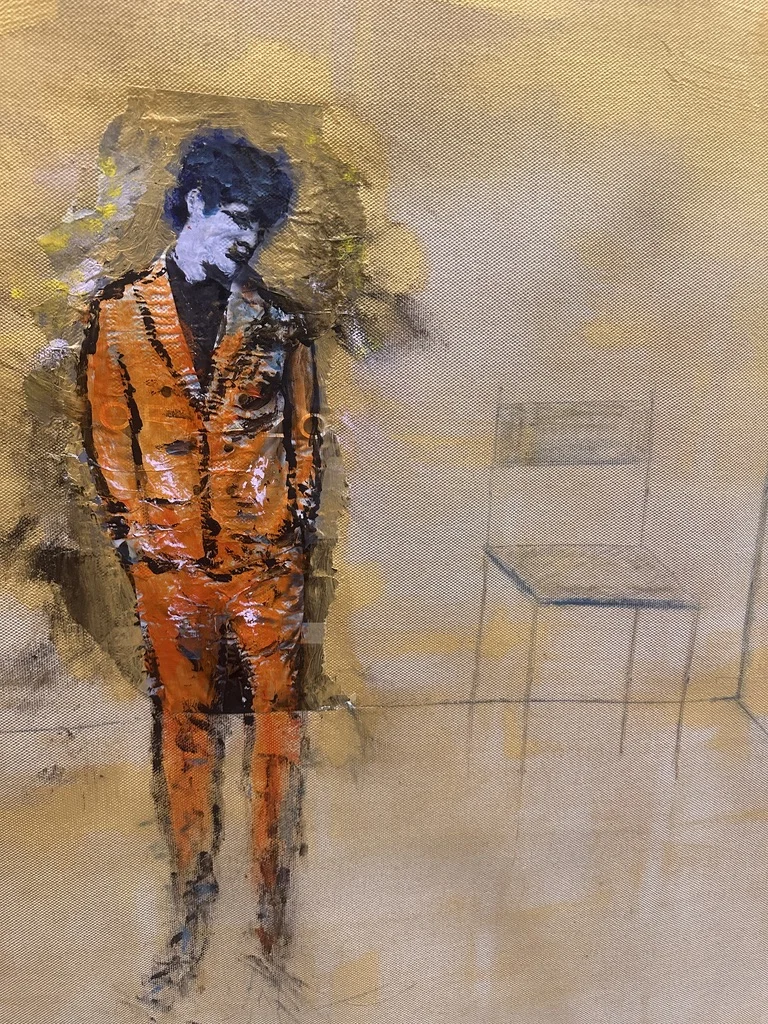
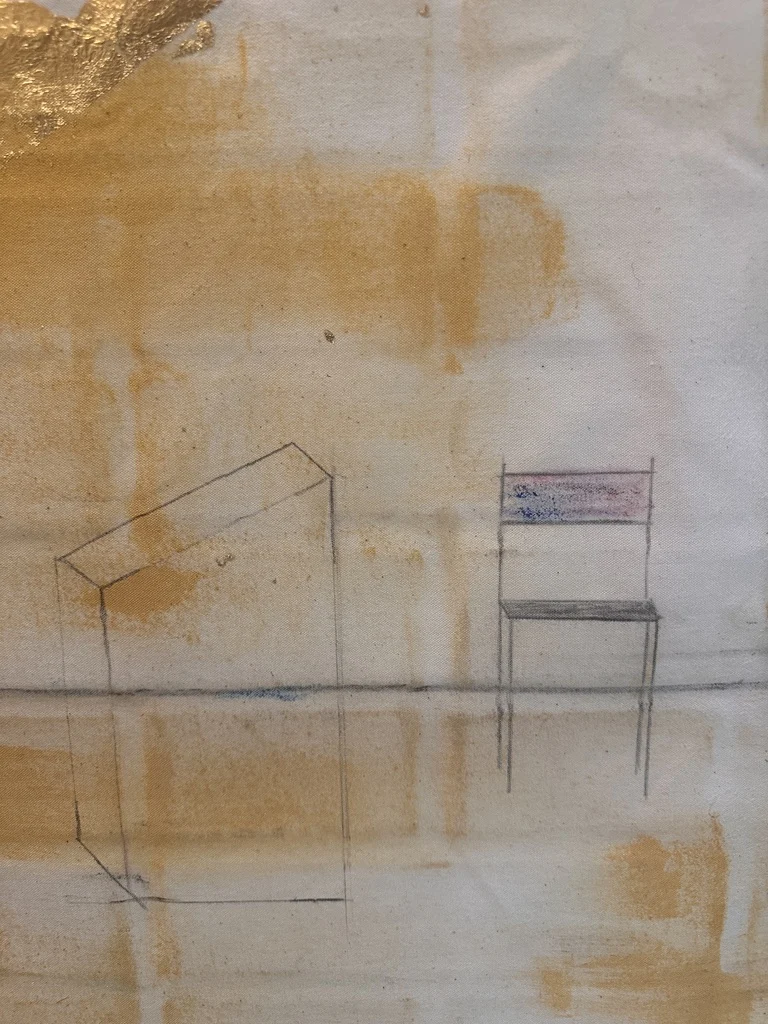
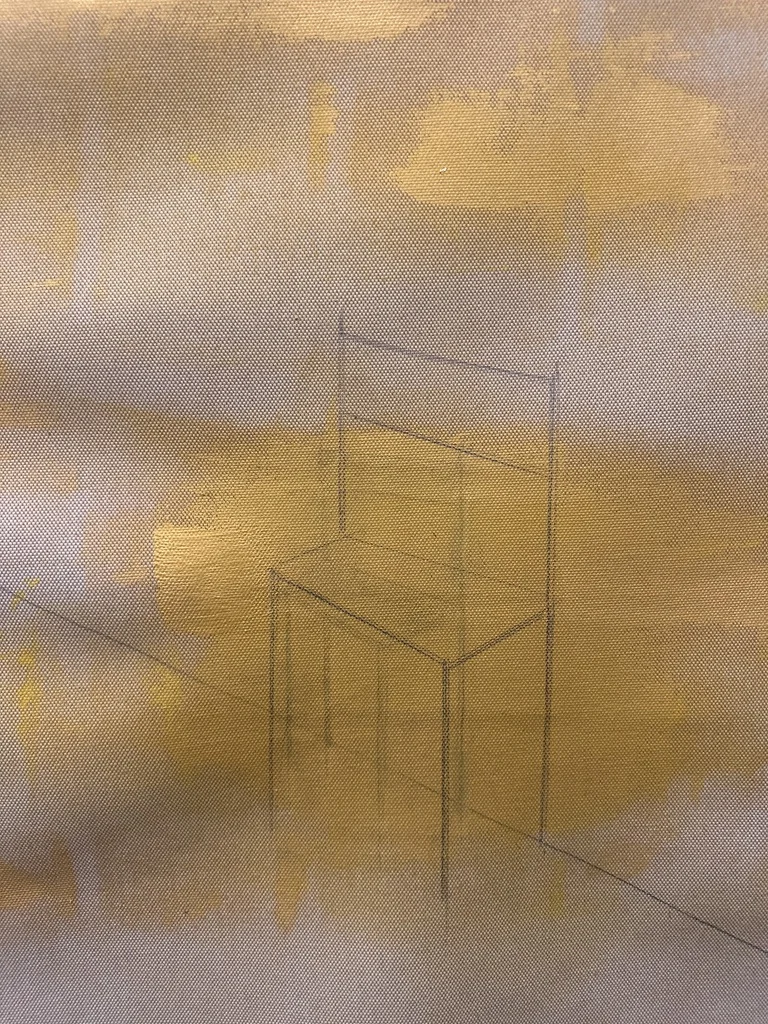
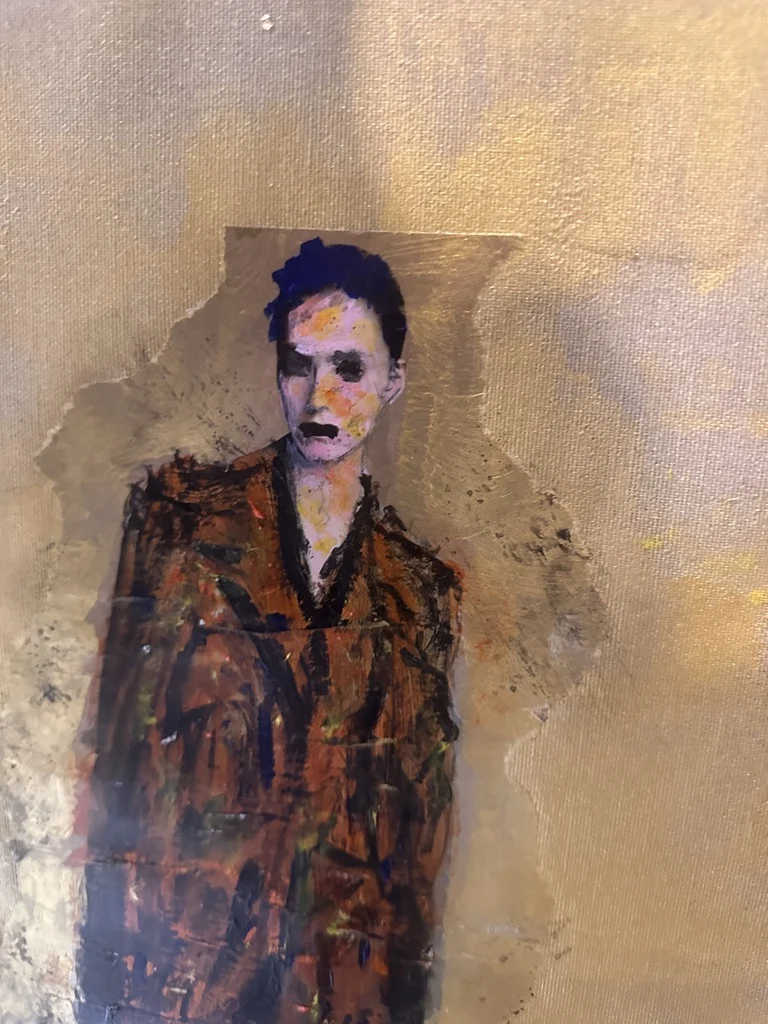
The figures are alone. Beside them remain a chair, a few lines, the corner of a room. Yet that enclosed space may also be sky. I am interested in the moment when a gaze or a pose, within an almost empty architecture, connects the infinity of the universe with the small things of our lives.
The room does not describe a home. It is a mental condition. The chair is not merely an object: it is waiting, possibility, absence—perhaps the place of someone who has not yet arrived or has already left. The figure does not occupy the centre in order to dominate the painting; it often seems measured by the emptiness surrounding it.
This attention to the psychological dimension of the figure has long run through my practice across painting, photography, video and performance. An independent outline of that trajectory is also available in my biographical entry on Wikipedia.
Gold in place of dampness
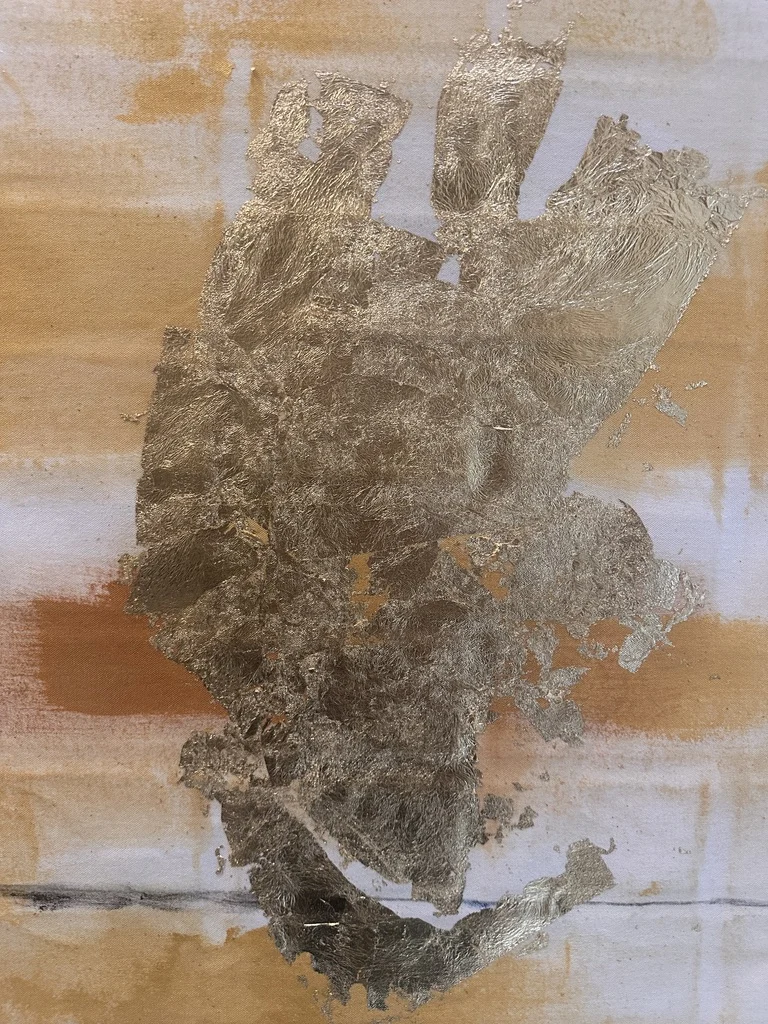
In earlier rooms, I allowed traces of damp, wounds and dead zones to emerge. Here, patches of gold appear. They are not a repair and do not seek to make precious what is not. Gold is malleable and contradictory: beauty, power, desire, violence. It can be light and wealth, but also a surface that seduces and conceals.
This is why the title does not merely name a colour. The Gold Standard asks what defines us as men and women. What is our measure when the soul confronts time, the limits of the body and the indifference of the universe? Gold does not answer. It reflects, changes with the light and forces the gaze to move.
To return is not to repeat
These canvases revisit works made around fifteen years ago, but they do not try to reconstruct them. Returning to a form means testing what remains alive and what can be abandoned. In the solo exhibition Strappi e profezie, covered by Exibart in 2021, canvases from 2008 coexisted with more recent works on paper: even then, the time of the work did not move in a straight line.
Today the painting is barer. The characters remain vulnerable, but the picture gives them more air. The ground is not a background: it is material, resistance, silence. I wanted every mark to earn its presence.
A measure, not a price
The word standard may immediately suggest economic value. Here it first names an inner criterion, an impossible and necessary measure. The market belongs to the material life of artworks, but it does not exhaust the reason they are painted.
An external reading of the cycle, with references to the wider practice and collecting context, is published by Acquistare Arte. A further feature is available on Vasari Codex. On the studio website, readers can follow the paths through the practice, consult documented works and return to my earlier reflection, A painted body is never only a body.
What remains
The Gold Standard emerges from this reduction: leave a figure, a chair, a room and gold. Remove enough that the painting does not explain, but continues to ask. If there is a measure of being human, perhaps it lies precisely in the distance between our finitude and what we continue to imagine as infinite.